Powering Energy Solutions for AI Factories: B&W, Siemens, and Applied Digital Collaborate
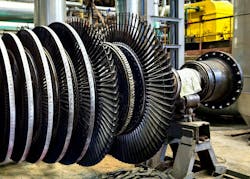
Engineering, procurement and energy (EPC) project construction firm Babcock & Wilcox will deliver gas-fired power plants for data center developer Applied Digital and has selected Siemens Energy to provide 1.2 GW of power generation equipment.
Siemens Energy will design and install four 300-MW natural gas-fired power plants, including boilers and associated steam turbines. The power plants will be contracted to deliver electricity for Applied Digital’s AI factory, although the site of the project has not been revealed.
“This arrangement brings together two companies with long histories of innovation and leadership in the power generation industry,” said Kenneth Young, Babcock & Wilcox (B&W) Chairman and CEO, in a statement. “Leveraging Siemens Energy’s advanced turbine technology alongside B&W’s proven boiler systems positions us to meet critical schedule milestones and deliver reliable power by the end of 2028.”
In a separate deal, Siemens Energy also is partnering with power management firm Eaton on developing data center packages including gen-sets, renewables and microgrid control and management technologies.
Applied Digital allocates $1.5B+ to AI factory power generation
B&W and Siemens have entered into an agreement for a limited notice to proceed to secure the turbine sets, which should enable B&W to deliver power for the project by the end of 2028. The full contract release is expected in this quarter of 2026.
In November, B&W and Applied Digital announced a $1.5 billion+ contract on the 1-GW energy capacity for an AI data center. AI factories are even more energy-intensive than typical data center server sites.
“Teaming with Babcock & Wilcox and Siemens Energy – both global market leaders with many decades of experience – ensures we have the proven technologies and trusted expertise needed to meet our aggressive timelines,” Applied Digital Chairman and CEO Wes Cummins said. “This agreement gives us confidence that we can deliver the capacity needed to support the next generation of AI infrastructure, and we look forward to working with the teams from both of these outstanding companies.”
Under the original plan announced in November, B&W would convert coal-fired plants to natural gas to power AI factories across North America and Europe. Natural gas is a fossil fuel but emits only about half of the CO2 of coal-fired plants.
What are AI factories compared with data centers?
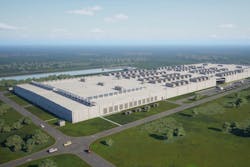
AI factories are unique from data centers, as chipmaker and graphics processing unit leader NVIDIA’s Rev Lebaredian described it. A data center is essentially a warehouse or storehouse of information which requires relatively minor computing power, while an AI factory is where that data is actively distilled and refined into something actionable to the user, whether it’s healthcare or manufacturing insights.
“You put into a factory all the raw materials and energy, and all the raw materials are reconfigured into it and out comes a refined production that is better than all of its parts,” Lebaredian, vice president of Omniverse and Simulation Technology at NVIDIA, said during the recent Schneider Electric Innovation Summit North America. “With the factory you want to maximize the density as much as possible.”
The EPC contract with Applied Digital adds about $3 billion to B&W’s project and revenue pipeline.
Applied Digital is advancing its AI factory buildout by drawing on nearly $800 million from its financing facility with private equity investor Macquarie Asset Management.
Applied Digital plans to spend that money in completing work on its Polaris Forge 1 and 2 AI factory campuses in North Dakota. Polaris Forge 2 already has contracted 200 MW of capacity to a U.S.-based hyperscaler, although that digital firm was not named in the initial press release.
Among the nation’s hyperscale data technology firms include Microsoft, Google, Meta, Amazon Web Services, Oracle and IBM.
The growth of data centers and AI factories may create a power generation crisis in coming years, so many hyperscalers and data campus developers are seeking co-located and sometimes off-grid prime power projects to meet the expected demand. The energy owners and operators can later connect to the grid, although utility interconnections sometimes take years to complete.
Meeting at the intersection of data center and microgrid energy
The upcoming Microgrid Knowledge Conference 2026 is developing a data center and energy park community to discuss the key issues around meeting future digital infrastructure demand with microgrids and other off-grid or co-located power generation. Microgrid Knowledge 2026 is May 4-6 at the Renaissance SeaWorld in Orlando. Registration is now open at early bird rates.
About the Author
 Rod Walton, Microgrid Knowledge Managing Editor
Rod Walton, Microgrid Knowledge Managing Editor
Managing Editor
For Microgrid Knowledge editorial inquiries, please contact Managing Editor Rod Walton at [email protected].
I’ve spent the last 18 years covering the energy industry as a newspaper and trade journalist. I was an energy writer and business editor at the Tulsa World before moving to business-to-business media at PennWell Publishing, which later became Clarion Events, where I covered the electric power industry. I joined Endeavor Business Media in November 2021 to help launch EnergyTech, one of the company’s newest media brands. I joined Microgrid Knowledge in July 2023.
I earned my Bachelors degree in journalism from the University of Oklahoma. My career stops include the Moore American, Bartlesville Examiner-Enterprise, Wagoner Tribune and Tulsa World, all in Oklahoma . I have been married to Laura for the past 36-plus years and we have four children and one adorable granddaughter. We want the energy transition to make their lives better in the future.
Microgrid Knowledge and EnergyTech are focused on the mission critical and large-scale energy users and their sustainability and resiliency goals. These include the commercial and industrial sectors, as well as the military, universities, data centers and microgrids. The C&I sectors together account for close to 30 percent of greenhouse gas emissions in the U.S.
Many large-scale energy users such as Fortune 500 companies, and mission-critical users such as military bases, universities, healthcare facilities, public safety and data centers, shifting their energy priorities to reach net-zero carbon goals within the coming decades. These include plans for renewable energy power purchase agreements, but also on-site resiliency projects such as microgrids, combined heat and power, rooftop solar, energy storage, digitalization and building efficiency upgrades.