Meeting the Many-Gigawatt Challenge: Generac Embraces the Industrial Compute Age
Key Highlights
- - Strategic partnerships with firms like CPower and EPC Power enable Generac to deliver integrated DER and microgrid solutions without directly developing or operating projects.
- - The industry is moving toward standardization and speed in microgrid deployment to address the 'many-gigawatt' problem of connecting large loads efficiently.
- - Collaboration and modular design are key to overcoming the customization challenges of microgrids, making them more accessible and scalable for widespread adoption.
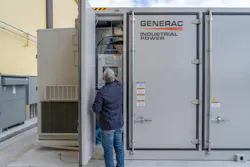
Someone who spent more than a decade solving distributed energy challenges for major utilities probably recognizes as well as anyone the utility-scale scope of the capacity issue facing the grid now.
Fazil Shaikh brought those talents honed at NRG and Dominion, among other companies, directly into the on-site power sector with his current gig at generator and emergency energy equipment provider Generac. Shaikh is senior director of strategy and growth for the small generator giant and, on an ever-expanding scale, oversees its expanded strategy in meeting the speed-of-power needs of data centers with distributed energy resources.
Like other companies, Generac broadened its product line beyond home generators into the commercial and industrial sectors. Data centers and grid-edge services are two key fronts where Generac now plays, utilizing an array of assets beyond the historical diesel generators.
“We’re talking to data centers, where there is more consideration now for battery energy storage,” Shaikh told Microgrid Knowledge during an exclusive interview. “And then there is C&I. The focus there is affordability, accessibility, resiliency and sustainability.”
Four horsemen and Three Ts of energy resiliency

Ah, those must be the Four Horseman of the looming C&I Energy Transition. Large scale AI and cloud-based computing energy customers need baseload and flexible power, but they do not want to abandon clean emissions goals completely.
Utilities and grid planners are stressed in crossing all the Ts in current and near-future power generation agreements—Terawatt, Tremendous and Terrifying.
A solar farm power purchase agreement by a hyperscaler sounds all well and good, but that’s the indirect path to decarbonization and the pressure these days to meet growing load is forcing more responsive and dependable energy closer to the customer.
And those customers don’t want to break the grid or the bank in doing so.
“Across the entire grid, we need more flexibility and better utilization,” Generac’s Shaikh said. “When you look at our equipment—whether it’s natural gas generators, battery energy storage or multi-asset systems—we want to help C&I customers address their needs primarily around resiliency and affordability.
“Many times, resiliency is solved with standby backup generators,” he added. “Increasingly, that means natural gas generators and, increasingly, natural gas generators participating in emergency demand response are part of the solutions set.”
The new business model is diversifying the old one
Adapt or die is a story played out over and again in commercial and industrial circles. Blockbuster vs. NetFlix, anyone?
Change is the only constant as ever. Generac, like several other notable gen-set manufacturers, is stretching its product focus beyond backup emergency to much more of a holistic approach for larger customers with mission-critical needs. The rising AI and data center load curve calls for diverse strategies within traditional grid interconnections which are not ready for the race entirely.
Earlier this year, Generac acquired a new manufacturing site in Illinois to upgrade packaging capacity for large-megawatt generators. It also acquired generator enclosure manufacturer Enercon Engineering.
In sign of deepening the DER and microgrid value proposition, Generac and virtual power plant (VPP) platform CPower Energy announced their collaboration to leverage DER assets across the PJM, the largest U.S. grid interconnection, to deliver better resiliency and demand response outcomes for C&I customers.
Staying in your lane while finding teammates to accelerate
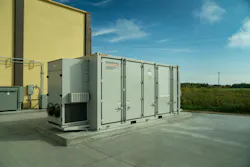
Perhaps the smartest thing about growing and expanding is to know what you’re good at and yet find the right partner which is better at something else much desired.
“At the end of the day, we are an OEM (original equipment manufacturer),” Generac’s Shaikh told Microgrid Knowledge. “We do not develop projects. We do not deploy capital or own and operate these projects. We do not construct these projects; we’re not an EPC (engineering, procurement and construction firm).
“But we work with those who do,” he added. “Conversely, by having access to our equipment suite and understanding how to position and price it, CPower can quickly help C&I customers understand what the right solution is and what the value proposition looks like. Together we can create more volume and velocity to get more distributed capacity out there.”
Generac is committed to collaboration with others in the microgrid field. The problem with microgrids, some say, is that they are too customized. When you see one microgrid . . . You’ve seen one microgrid, so goes the joke used often at the Microgrid Knowledge Conference.
Modularity, standardization and speed of power are deeply needed to either interconnect grid-wise or deploy behind-the-meter prime power for data centers and other industrial sites.
“Historically, microgrids have been a science project,” Shaikh said. “As an OEM, we have now assembled all the major equipment for a microgrid—the generator, the battery and the controls. This is no longer a science project. We’re able to package these technologies together and make the solution more modular.”
That’s good news for both the microgrid industry and grid-edge power deployment, in general.
At Generac and partnering companies, it is a critical mission statement. In addition to working with CPower Energy, the generator supplier also began forming a collaboration with inverter builder EPC Power Corp. to utilize battery storage for low-voltage ride-through needs within the Electric Reliability Council of Texas (ERCOT) grid system.
AI training variables create significant transient load challenges for the grid, and batteries can respond in milliseconds to signals around severe voltage fluctuations.
“Data centers present interesting new problems for the grid that I think the market believes battery storage can be a great solution to help solve,” Generac’s Shaikh pointed out. “These large AI training loads have very variable load profiles. You don’t want the utility or the co-located prime-power source to absorb those oscillations because that can create havoc on rotating machinery or the grid.”
Breaking down the “many gigawatt” problem with multi-tiered solutions
These kinds of statements bring Shaikh back to some of his deepest utility roots. Distributed and grid-edge technologies do not have to be an alternative to grid-level power as much as a front line of defense, some say.
Generac’s Shaikh certainly agrees. His company has its clear strengths and are well known for those. Stretching by merging strategies with companies such as EPC Power, engineering firm EPE, CPower and others is all about meeting a tremendous challenge through teamwork.
“This is a many-gigawatt problem,” he said. “This is the first time this is happening. We used to connect big power plants. Now we’re talking about connecting huge loads.
“I think states, utilities and ISOs (independent system operators such as PJM, ERCOT and MISO) are doing the best they can,” Shaikh said. “Industry and customers need to continue coming together and help figure this out as quickly as possible.”
One site where this challenge is front and center will be the Microgrid Knowledge Conference happening May 5-7 at the Renaissance Phoenix Glendale Hotel and Convention Center. The MGK Conference Call for Sessions is now open for those who have content ideas to pitch.
About the Author
 Rod Walton, Microgrid Knowledge Managing Editor
Rod Walton, Microgrid Knowledge Managing Editor
Managing Editor
For Microgrid Knowledge editorial inquiries, please contact Managing Editor Rod Walton at [email protected].
I’ve spent the last 18 years covering the energy industry as a newspaper and trade journalist. I was an energy writer and business editor at the Tulsa World before moving to business-to-business media at PennWell Publishing, which later became Clarion Events, where I covered the electric power industry. I joined Endeavor Business Media in November 2021 to help launch EnergyTech, one of the company’s newest media brands. I joined Microgrid Knowledge in July 2023.
I earned my Bachelors degree in journalism from the University of Oklahoma. My career stops include the Moore American, Bartlesville Examiner-Enterprise, Wagoner Tribune and Tulsa World, all in Oklahoma . I have been married to Laura for the past 36-plus years and we have four children and one adorable granddaughter. We want the energy transition to make their lives better in the future.
Microgrid Knowledge and EnergyTech are focused on the mission critical and large-scale energy users and their sustainability and resiliency goals. These include the commercial and industrial sectors, as well as the military, universities, data centers and microgrids. The C&I sectors together account for close to 30 percent of greenhouse gas emissions in the U.S.
Many large-scale energy users such as Fortune 500 companies, and mission-critical users such as military bases, universities, healthcare facilities, public safety and data centers, shifting their energy priorities to reach net-zero carbon goals within the coming decades. These include plans for renewable energy power purchase agreements, but also on-site resiliency projects such as microgrids, combined heat and power, rooftop solar, energy storage, digitalization and building efficiency upgrades.