African Development Bank Advances Mission 300 Goal with $58M Minigrid Project in Eritrea
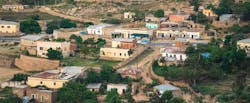
The African Development Bank Group (AfDB) is investing $58 million to develop a solar-powered minigrid in Eritrea. The system will support clean water pumping, enhance irrigation and agricultural productivity, and help small enterprises and agro-processors extend operating hours.
The 34-MW installation will also provide clean, lower-cost electricity to residential customers in the communities of Tesseney, Berantu and Kerkebet, all in the western part of the county.
Located on the Red Sea in eastern Africa, Eritrea is one of the continent’s poorest countries. Less than half of the population has access to electricity, and for those who do, most of it is generated by oil-based power plants.
“This timely investment will help deliver reliable and affordable clean power to communities in Eritrea that need it most, thereby spurring job creation, strengthening local economies and helping Eritrea move towards a sustainable energy future,” Kevin Kariuki, AfDB’s vice president for power, energy, climate & green growth, said in a statement.
Funds for the project come from the bank’s African Development Fund ($43.31 million) and its Transition Support Facility ($20.73 million).
In addition to the minigrid, the grants will fund the construction or modernization of approximately 542 kilometers (337 miles) of distribution lines.
The endeavor is expected to improve electricity access and reliability for over 300,000 people, reduce the region’s greenhouse gas emissions and help Eritrea transition to a low-carbon, climate-resilient economy.
Advancing the mission of Mission 300
The project is part of AfDB’s Desert to Power Initiative, a renewable energy and economic development program that aims to improve electricity access in line with the Bank’s commitments to Mission 300.
Mission 300 is a joint initiative of the World Bank and the AfDB designed to expand access to reliable, affordable and sustainable electricity. If its vision of reaching 300 million Africans by 2030 is fully realized, the program will halve the number of people currently lacking direct access to electricity, most of whom live in sub-Saharan Africa.
Launched last year, nearly 30 countries have signed Mission 300 Energy Compacts, with the vast majority signaling that minigrids will play a key role in their electrification strategy.
Minigrids are already in high demand in places like Zambia, Ethiopia and Nigeria; however, a 2024 report from the Africa Minigrid Developers Association (AMDA) found that, while deployment is thriving in Africa, the pace is well below what is needed to meet Mission 300’s timeline.
Sometimes called remote microgrids, minigrids are typically built in areas without access to a central electric grid. The systems use software to control distributed renewable energy resources, such as solar panels and battery storage, providing remote communities with reliable, clean and affordable power.
They can also provide bridge power until communities can be connected to the grid.
Last month, the AMDA and more than two dozen minigrid companies published a position paper arguing that changes to existing financing and regulatory structures are required for the Mission 300 initiative to succeed.
The organization outlined 17 action steps it says will help the industry meet the scale, speed and structure needed to meet electrification targets.
About the Author
 Kathy Hitchens
Kathy Hitchens
Special Projects Editor
I am a writer and special projects editor for Microgrid Knowledge. I have over 30 years of experience covering the renewable energy, electric vehicle, utility, technology, entertainment, education, and financial sectors. I have a BFA in Media Arts from the University of Arizona and a MBA from the University of Denver.