DOE Offers Up to $35M to Accelerate Batteries and Electrification
The US Department of Energy is making $35 million available to support research into batteries and electrification with concept papers due February 5 and full applications on April 7.
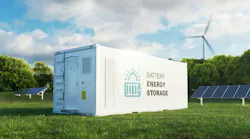
Projects like this add to the body of knowledge available on advanced energy technologies like flow batteries. Ameresco looks forward to reporting on the outcome of this investigation and future developments. (By cybrain/Shutterstock.com)
Projects like this add to the body of knowledge available on advanced energy technologies like flow batteries. Ameresco looks forward to reporting on the outcome of this investigation and future developments. (By cybrain/Shutterstock.com)
The U.S. Department of Energy is making $35 million available to support research into batteries and electrification with concept papers due February 5 and full applications due on April 7.
Funded through the Office of Energy Efficiency and Renewable Energy, the program is part of an effort by the federal government to find more affordable, efficient and secure energy for transportation.
The $35 million for batteries and electrification may be applied for to work on:
Advanced liquid electrolytes for lithium-ion cells under extreme conditions, such as extreme fast charging, and mechanical, thermal or electrical abuse
Novel liquid electrolytes for lithium-sulfur cells that improve the overall stability and performance of these cells
Lithium-sulfur and lithium-air battery cell development
High-power density traction inverters for use in light-, medium- or heavy-duty vehicle applications
By cybrain/Shutterstock.com
In supporting materials, the DOE noted improvements in how lithium-ion cells perform in extreme conditions, such as under higher voltages, extreme temperatures, abuse, and fast charging. But stability and properties of the liquid electrolytes within the cells affect their performance, so the need exists to develop novel liquid electrolytes to overcome these issues.
The DOE anticipates solutions may be found in fluorinated solvents and additives, ionic liquids, high-concentration electrolytes and other nontraditional electrolytes, although it is open to considering other approaches.
The research program will accept applications under a two-phase process, starting with a concept paper and followed by a full application.