Big Grid Problems, Small Grid Solutions

If you frequent the pages of this or any other energy-related publication, you know the U.S. grid has a problem. Driven by EVs, electrification and power-hungry AI data centers, demand is poised to grow faster than the grid can reliably add generation and transmission infrastructure.
Case in point: PJM. The biggest U.S. transmission organization’s last two capacity auctions revealed a growing gap between available capacity and reserve margin targets. In the 2027/2028 auction, the difference was more than 6,500 MW, a chasm that makes the 210 MW shortfall of the previous year look almost quaint.
Naturally, wholesale capacity prices in the region have skyrocketed at an equally shocking pace —up more than 1,000% since 2023.
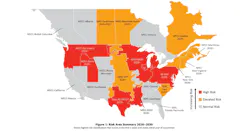
And PJM is not alone. In its latest Long-Term Reliability Assessment, the North American Electric Reliability Corporation (NERC) found that 13 of 23 of its assessment areas will “face resource adequacy challenges over the next 10 years.”
NERC placed PJM, MISO, Texas, and large portions of the west in its high risk category, with much of the east coast and central U.S. at elevated risk.
Optimizing the grid to meet rising demand
It is unlikely that growing demand will be addressed by any single technology or resource. Instead of the proverbial silver bullet, utilities, grid operators, energy service providers and large power users are pursuing an arsenal of complementary solutions.
As part of that hybrid strategy, many are building virtual power plants (VPP) to squeeze more power from the existing grid without massive infrastructure investments.
VPPs use advanced software and communication technologies to manage, optimize and coordinate the output of tens, hundreds or even thousands of distributed energy resources (DERs), like rooftop solar and energy storage systems, electric vehicles, smart thermostats, and smart home devices such as appliances, televisions and smart lights.
Aggregating these DERs creates a single, dispatchable resource that can be used to bolster the grid by reducing load or creating supply during times of peak demand, helping the grid to stay in balance.
In most cases, the DERs are owned by the customers themselves — homeowners and businesses who, in exchange for allowing their devices to be tapped by a utility or aggregator, are typically compensated through incentive payments or reduced energy bills.
The federal government is on board with VPPs, with the U.S. Department of Energy (DOE) calling them, “solutions that can be deployed at scale in a short timeframe to maximize the use and value of existing grid infrastructure, minimize costs to ratepayers, and ensure a resilient, reliable, and secure grid for all.”
In fact, the DOE has suggested that tripling existing VPP capacity by 2030 — adding 80 to 160 GW — could address 10% to 20% of the forecasted peak load.
Meeting demand from the edge
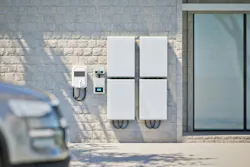
“The central generation model is just changing, it's a paradigm shift,” Nick Tumilowicz, director of product, distributed energy management at Itron, told Microgrid Knowledge in a recent interview. Itron provides technology and data solutions that help utilities measure, monitor and manage energy use across electric systems.
“I think VPPs offer this promise of…visibility, control and the optimization of the existing grid,” he said. “This is not to say that you won't have new central generation, and (that) you won't do transmission and distribution upgrades, I'm pretty sure that'll all still happen. But the scale at which it will happen, I think, will be significantly changed because [VPPs offer] a cost-effective way to access the flexibility of energy resources behind the meter.”
Utilities and aggregators have been building out VPP programs at an accelerating pace.
In Colorado, Xcel Energy partnered with Itron and Tesla to grow its VPP program, using Itron's grid edge platform to manage and dispatch solar energy stored in participating Tesla Powerwall systems.
In Washington state, Puget Sound Energy expanded its VPP partnership with AutoGrid (now known as Uplight), adding customer management and aggregation monitoring to a program it first launched in 2021.
On the residential side, a new class of dedicated aggregators is emerging to sit between consumers and the utilities they serve.
Renew Home, which launched in 2024 claiming to be the largest residential VPP in North America, is coordinating connected devices across millions of homes on behalf of more than 100 utility partners, including NRG in Texas.
The Lone Star state, with its competitive electricity market, has become a particularly active market.
Retail electricity provider Abundance Energy partnered with sonnen, a battery and VPP technology provider (whose name is stylized lower-case) to create a large VPP, while in Houston and Dallas, consumers can enroll their Powerwall storage systems in virtual power plants through ERCOT’s Aggregated Distributed Energy Resource (ADER) program.
The latest development comes out of PJM where VPP developer Voltus has signed Google to a three-year agreement to aggregate up to 100 MW of DERs from homes and businesses. The "Bring Your Own Capacity" model could serve as a blueprint for how large power users — the same ones straining the grid — become part of the solution.
On the policy front, states are increasingly writing VPPs into law.
Massachusetts Governor Maura Healey signed an executive order in March directing the state to develop 3.5 GW of demand-management resources, including VPPs, by 2035. In Virginia, Governor Youngkin signed the Community Energy Act in 2025, directing Dominion Energy to launch a 450-MW VPP pilot.
Access and ownership challenges
While the future appears bright for virtual power plants, the industry is facing some headwinds.
In Minnesota, a controversial Xcel proposal to deploy utility-owned neighborhood batteries has ignited a debate about who should own the assets in a VPP — the utility or the consumer.
The dispute may reflect a broader tension over control and access.
Voltus has raised concerns about access to the utility data they need to enroll customers in VPP programs and participate in wholesale energy and capacity markets.
In a complaint recently filed with the Federal Energy Regulatory Commission (FERC) Voltus and Mission:data, a coalition of tech companies that aims to give consumers access to their energy usage and cost data, argued that many PJM utilities either don't provide bulk access to hourly interval meter data for thousands of residential customers, or they make the requirements so burdensome as to effectively block access altogether.
Getting it right
Other countries are further along in their VPP journey, and they offer both warnings and models worth emulating.
Germany has seen significant adoption of home battery storage, but Tumilowicz warns that prioritizing VPP market participation over grid stability — as has happened there — is a mistake the U.S. should avoid. When a smartphone app signals a lucrative market opportunity, homeowners can discharge their batteries simultaneously — overwhelming local transformers and triggering the very outages the system was meant to prevent.
"Now, you really have a tier one problem," he said, "The most important thing is just to keep your electricity on, and now you don't have electricity because you tried to make some money."
The right priority order for VPPs, he argues, should be distribution-level grid stability first, emergency load shedding second, and market participation third.
A new relationship with the grid
Underlying all of these challenges is a fundamental shift in the relationship between utilities and their customers. For VPPs to work at scale, consumers must trust that their comfort won't be sacrificed for grid optimization — water heaters must stay at temperature, an EV must always have enough charge. "This is where there's going to be really significant change," Tumilowicz said.
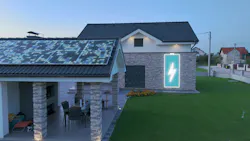
That change, he suggests, is already underway. Some automakers and device manufacturers are selling cars, solar, and batteries as an integrated package, with apps that let customers participate directly with their utility — an early signal of where the industry is headed.
The grid of the future, it turns out, may be built not from massive new power plants, but from millions of homes.
Hear more from Nick Tumilowicz in the T&DWorld Webinar
“Unlocking Grid Edge Intelligence: Turning AMI Data into DER Insights"
About the Author
 Kathy Hitchens
Kathy Hitchens
Special Projects Editor
I am a writer and special projects editor for Microgrid Knowledge. I have over 30 years of experience covering the renewable energy, electric vehicle, utility, technology, entertainment, education, and financial sectors. I have a BFA in Media Arts from the University of Arizona and a MBA from the University of Denver.