DTE Energy and sonnen bring Michigan’s First Residential Battery VPP to Life
DTE Energy and sonnen, a battery and virtual power plant technology provider, have launched Michigan’s first residential battery virtual power plant (VPP) pilot at Veridian at County Farm, a new carbon-neutral housing development in Ann Arbor.
VPPs use advanced software to connect and coordinate distributed energy resources (DERs)—everything from rooftop solar panels and home batteries to electric vehicles and smart appliances. They aggregate tens, hundreds or even thousands of connected DERs into a single, dispatchable resource, enabling VPPs to support the grid during peak demand, lower energy costs for consumers and delay or even eliminate the need for new grid infrastructure.
“We know affordability matters more than ever,” Joi Harris, president and chief executive officer of DTE Energy, said in a statement. “That’s why we’re exploring innovative ways to make better use of energy resources. This pilot is an opportunity to test an approach that could ultimately provide a lower-cost way to meet growing energy needs and strengthen reliability.”
A purpose-built community
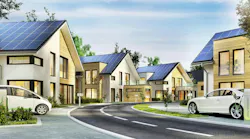
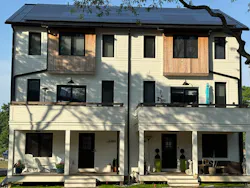
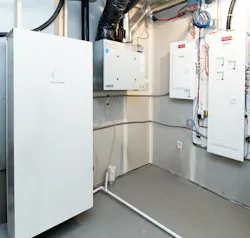
Thrive Collaborative, a local property developer focused on constructing life-enhancing communities, designed and built Veridian at County Farm as a virtual power plant. Each of its 170 fully electric homes include at least 1.3 MW of rooftop solar and a sonnen intelligent battery.
What Thrive Collaborative and sonnen didn’t have when they broke ground was DTE’s commitment to conduct the pilot project.
The developer “built the whole virtual power plant's infrastructure with no DTE contract,” Blake Richetta, CEO of sonnen, told Microgrid Knowledge in an exclusive interview. Thrive’s founder Matt Grocoff had a “we will build it and they will come mentality,” Richetta added. “It was crazy risky for him.”
Negotiations with the vertically integrated, investor-owned utility took more than four years. The final deal, which gives DTE a direct, instantaneous and automatic connection to the battery network for full dispatch, was announced late last month.
“This pilot marks a historic moment for Michigan as DTE’s first VPP pilot project, and a defining moment for Veridian,” Grocoff said in a statement. “We’re incredibly proud that this community can serve as the place where this vision can move from concept to reality, and grateful to everyone involved for helping bring it to life.”
The terms of the deal, which include both upfront fees and annual payments for the rights to the VPP’s energy, were not disclosed.
A true non-wires alternative
Richetta is quick to point out that this VPP is different from other, more demand response-focused systems increasingly found in the U.S. While not discounting the importance these load-shedding mechanisms, he said that sonnen defines VPPs as both a power plant and a piece of infrastructure just like poles, wires and transformers.
The company’s VPP software will integrate into the same grid operating system DTE Energy uses to operate its power plants, transmission and distribution systems, substations and transformers.
“DTE will have the ability to sculpt an ideal load shape,” Richetta explained, meaning they’ll be able to withdraw energy from and inject energy back into the grid based on what’s best for the grid and for consumers' wallets.
“There's so much value to the energy system in having that cluster of batteries dispatched…the VPP is a flexible, dispatchable load, which is like magic for a utility. They can make load whenever they want to make load.”
For example, if DTE needs to decongest a substation in Ann Arbor, rather than buying and building another transformer, they can just shape the Veridian VPP load accordingly.
“And that's just the beginning,” he added, noting that frequency response, voltage support, reactive power and other VPP functions that add value to the decentralized, digitalized grid of the future will be immediately available to DTE.
“It’s exactly the kind of forward-thinking approach that has the potential to help keep energy affordable for customers over the long term,” DTE’s Harris said.
Creating a new VPP playbook
This is not the first time that sonnen has worked with an integrated, investor-owned utility to pilot a VPP.
The firm partnered with utility Rocky Mountain Power (RMP) to roll out a VPP in Utah dubbed the “Go Back” program. By upgrading existing residential solar systems with smart grid interactive batteries, RMP can convert a large rooftop solar fleet from intermittent generation to a firm dispatchable grid asset – lowering emissions and improving the reliability of the grid.
Similar programs have been introduced in Idaho and Oregon with Pacific Power, RMP’s sister company.
In Alberta, Canada, sonnen partnered with Landmark Homes, utility Epcor and electric retail provider Solartility to deploy a residential virtual power plant at Blatchford Lands, a master-planned Edmonton community. As with the Michigan system, it combines solar, battery storage and VPP software to support both household energy needs and peak grid demand.
Based on those experiences, Richetta says sonnen now has the playbook for navigating the often difficult and painful process of integrating a behind-the-meter residential energy storage system with a vertically integrated investor-owned utility.
First, he said, you need an innovative, progressive community focused on health, wellness, sustainability and clean energy. That foundation opens the door to the utility, which is the second key piece to launching a successful VPP.
“A truly grid interactive virtual power plant requires the grid operator, it requires the utility to be involved,” Richetta said, adding that you also need to find a champion at that utility.
“With every one of these old school utilities, it seems that it comes down to a human factor. No matter how important the machine is in these companies, it's an executive that falls in love and gets passionate” that helps guide the project through regulatory hurdles, he explained.
He said DTE has been very involved in establishing the VPP pilot at Veridian, that the entire team has been innovative, nimble and passionate about the project, though as a whole the utility is quiet about promoting their efforts in the space. DTE did not respond to an interview request for this story.
Proving the regulatory framework
Ultimately, Richetta hopes the pilot will demonstrate that VPPs work as advertised — reducing operations costs for DTE, lowering energy bills for consumers, integrating more solar into the grid and building a more resilient grid.
“If we get a passing grade, it's a bipartisan win, which is one of the things I love the most about the virtual power plant. If presented properly, both sides of the aisle like it,” he said. Hopefully we get that bipartisan victory and that helps Michigan really embrace the VPP.”
About the Author
 Kathy Hitchens
Special Projects Editor
I am a writer and special projects editor for Microgrid Knowledge. I have over 30 years of experience covering the renewable energy, electric vehicle, utility, technology, entertainment, education, and financial sectors. I have a BFA in Media Arts from the University of Arizona and a MBA from the University of Denver.