North Carolina Electric Coop and OATI Connect Microgrids and DERs Under Real-Time Control Platform
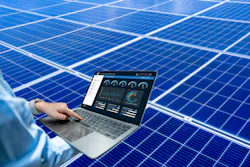
North Carolina Electric Membership Corporation (NCEMC) and OATI, an energy and utility software solutions provider, are implementing a real-time distributed energy resource management system (DERMS) across NCEMC’s 26 locally owned rural electric cooperatives to improve grid reliability across the state.
DERMS software enables utilities to manage, dispatch and optimize distributed energy resources (DER), customer-owned assets and other variable loads. The real-time DERMS to be deployed by NCEMC and OATI will enable live orchestration and control of the cooperatives’ solar and battery storage assets, demand response programs and five microgrids.
The data and forecasts provided by the next-generation DERMS will also mitigate operational silos.
The announcement marks an expansion of NCEMC and OATI’s partnership. NCEMC currently uses OATI DERMS software and microgrid controllers to manage its DER fleet.
"For years, OATI and NCEMC have collaborated to deploy some of the most advanced smart grid tools in the world—each serving the goal of providing more reliable service to the people of North Carolina,” Sasan Mokhtari, president and CEO of OATI, said in a statement. “We are bringing industry-defining, real-time control capabilities into NCEMC's existing OATI DERMS platform.”
A new approach to grid management
About 15 % of NCEMC’s peak need is served by DERs, including both utility- and customer-owned solar and energy storage assets, according to Lee Ragsdale, NCEMC’s senior vice president of strategic projects.
Ragsdale explained to Microgrid Knowledge that the cooperative currently uses OATI’s DERMS to block-schedule resources. They identify peak periods, such as winter mornings or summer afternoons, and schedule resources to operate during these fixed times. This approach allows the utility to optimize its resource portfolio by responding to changes in load, not only during peak demand but also as load ramps up or down.
“The collective effort of NCEMC and the state's distribution cooperatives allows us to focus on two big things,” Ragsdale said. “First, we can coordinate the availability of each individual asset throughout the system. In addition, we can look at all the assets together as an aggregated power supply portfolio. Each asset added expands the portfolio and expands the benefits for all our members across the state and the entire grid.”
However, he added, the grid is changing quickly, and more distributed energy resources are coming online. “One of the challenges is, how do you manage those touch points?” Ragsdale said.
“We are upgrading our derms to allow more real-time communication so that we can do things like dynamic signals to batteries and other resources that can serve the grid,” Ragsdale said.
Using the full portfolio of assets—not only for energy and capacity, but also for ancillary services—adds flexibility and strengthens overall system performance.
Microgrids, with their ability to support the grid and serve local loads during a grid outage, are increasingly a key part of many utility energy strategies.
North Carolina turns to microgrids for resilience
North Carolina is investing heavily in microgrids. After Hurricane Helene left many rural communities without power for weeks, the state announced it would invest $5 million to develop 26 microgrids across the state, two of which will be mobile.
NCEMC has been developing microgrids for nearly a decade—cooperative members currently operate five microgrids.
The Ocracoke Island microgrid in the Outer Banks launched in 2017. It improves grid reliability for residents during outages and relieves grid strain when demand spikes.
South River EMC, an NCEMC member cooperative, switched on the Butler Farms Microgrid the following year. The system incorporates a swine waste biogas generator with battery storage.
A solar and energy storage microgrid in eastern North Carolina soon followed. Located at Rose Acre Farms, a commercial egg layer that produces about two million eggs a day, the microgrid supports farm operations during outages and serves as a grid resource for Tideland EMC, another NCEMC member.
NCEMC also boasts two residential microgrids—a solar plus storage system at Heron’s Nest in eastern North Carolina and a battery-based microgrid at Eagle Chase in the north-central part of the state. Both systems are lowering customer energy costs and providing resilience during grid outages.
Ragsdale said the cooperative’s microgrids have performed well. He said that during the most recent winter storm to batter the state, there were no power losses that required any of the sites to island and serve a local load, so “we used the microgrids for the power supply portfolio, for the benefit of all members.”
Real-time DERMS expected to be live later this year
"Managing the power grid to meet customer expectations for reliability and resilience has never been more challenging," said Mokhtari. "OATI's pioneering work on real-time DERMS is a game-changer for an industry that possesses zero margin for failure.”
NCEMC and OATI worked all last year to define requirements and understand how the real-time DERMS would work, according to Ragsdale. That included ensuring the cooperative’s energy management system, which manages its portfolio of traditional generation, would work in concert with the real-time DERMS.
He expects testing to begin in the second quarter, with the rollout complete by September.
About the Author

Kathy Hitchens
Special Projects Editor
I work as a writer and special projects editor for Microgrid Knowledge. I have over 30 years of writing experience, working with a variety of companies in the renewable energy, electric vehicle and utility sector, as well as those in the entertainment, education, and financial industries. I have a BFA in Media Arts from the University of Arizona and a MBA from the University of Denver.