A Decade of Proof: How One DC Microgrid is Demonstrating a Different Energy Future
Key Highlights
- The HPP DC microgrid has operated continuously for over a decade, validating its practical application in commercial settings.
- Efficiency improvements of 10% to 18% have been achieved by distributing DC power directly to native loads, reducing conversion losses.
- The system enhances resilience by maintaining operations during utility outages, critical for industries like data centers and manufacturing.
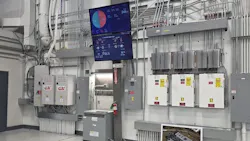
For years, direct current microgrids have occupied a curious space in the energy industry: promising in theory but often viewed as experimental in practice. At a facility in Charlotte, North Carolina, however, a DC microgrid (DCMG) has spent over a decade testing whether an alternative approach to power distribution can deliver measurable benefits for the real world.
The Hyde Park Partners (HPP) DC microgrid began as a collaboration with Bosch in 2014 to explore a straightforward question: What happens when renewable energy is generated, stored, and consumed in its native DC form rather than being repeatedly converted to and from AC?
The system was installed as working commercial platform, enabling the 24,000 square foot office and distribution facility to produce and consume power on-site while evaluating the practical applications of DC energy distribution.
What started as a research effort has evolved into a production-grade energy platform powering lighting, office and warehouse infrastructure, and ongoing technology development. Unlike many demonstration projects, the HPP microgrid remained in operation and continued expanding even after Bosch exited the DCMG market in 2018.
The project advanced through a partnership between AEG International, a company under the Hyde Park Partners umbrella, and Direct Energy Partners, transforming the site into an active development and testing environment for commercial DC applications.
“We weren’t interested in building a laboratory experiment,” said HPP Vice Chairman Clifton Vann. “We wanted to understand whether DC could power a real business every day. More than a decade later, the microgrid continues to support active commercial operations while serving as a platform for innovation and product development.”
The project’s continued evolution reflects a broader reality in modern energy systems. While electric grids distribute AC power, many of today’s most important technologies inherently operate on DC power, including batteries, LED lights, electronics, servers, and electric vehicles. Traditional electrical systems require multiple power conversion stages before these devices can use energy, introducing losses and additional equipment along the way.
By distributing DC directly to native DC loads, the HPP microgrid reduces conversion losses and simplifies the electrical architecture needed to support modern energy technologies. AEG reports that its operational experience with the HPP microgrid indicates efficiency gains of 10% to 18% compared with conventional solar-plus-AC architectures.
Lighting has been one area where those efficiencies have been particularly visible. AEG’s proprietary DC high-bay lighting driver, developed and deployed at the site, operates at up to 98.4% efficiency. By comparison, most commercial LED drivers range from 80% to 93% efficiency, with premium products reaching approximately 96%.
The project has also become a case study in resilience. Because generation, storage, and distribution occur within a localized microgrid environment, the system can continue supporting operations even when utility service is disrupted. For industries where outages can carry significant economic consequences, that capability can be as or more valuable than cost savings alone. Many sectors such as data centers, manufacturing, and pharmaceutical production often view outage avoidance as a primary driver for investment in resilient energy infrastructure.
In recent years, the site has entered a new phase of development focused on scalability. Between 2023 and 2024, a second DCMG was added, including a 256-kWh battery system and expanded 350-VDC distribution infrastructure. In 2024, the two microgrids were interconnected through a shared DC bus, enabling active load sharing between systems.
Additional enhancements have included broader deployment of DC-powered lighting, installation of Power over Ethernet drivers and server panels, modernization of controls and metering systems, a solar tracking system, and further rooftop solar capacity added in 2025.
Perhaps more importantly, the interconnected microgrid architecture provides a practical demonstration of how future campuses, industrial facilities, and even communities could share power resources. What was once a theoretical concept is now being exercised daily through active power sharing between two operational DC microgrids.
For developers and facility owners, the implications extend beyond efficiency metrics alone. DC microgrids offer a pathway toward greater energy independence through on-site generation and consumption, a model often described as “prosumption.” By reducing dependence on traditional utility infrastructure and enabling closer integration between renewable generation, storage, and end-use loads, DC architectures could help address growing concerns about grid constraints, rising energy costs, and long-term resilience.
After more than a decade of continuous operation, the HPP microgrid offers something that many emerging energy technologies struggle to provide: a long-term operating record. As utilities, developers, and businesses search for ways to support increasing energy demand while improving resilience and efficiency, the product demonstrates that DC microgrids are no longer just a concept. They are operating today, providing a glimpse of how future energy systems may be designed.
About the Author
Kate Throneburg
Kate Throneburg is business development manager at AEG International. She leads project development and marketing strategy for the North Carolina-based firm which develops on-site solar power and water filtration systems.