Mt. San Antonio College Signs $49M Energy Services Contract, Considers Future Microgrid
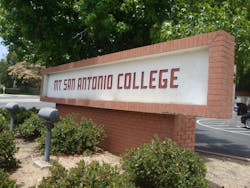
Mt. San Antonio College (Mt. SAC), one of the largest community colleges in California, is investing $49 million in a distributed energy and resiliency project.
The college selected Willdan, an Anaheim-based provider of engineering and energy services, to install distributed energy resources and perform infrastructure upgrades under an energy services contract.
With an energy services contract, the developer finances and installs efficiency upgrades to a facility, then is repaid by the customer over time using the money saved on energy bills — essentially letting the upgrades pay for themselves.
Willdan will install solar PV systems, a battery energy storage system and EV charging stations at Mt. SAC, as well as redesign a parking lot to accommodate the infrastructure.
“Sustainability is central to our mission and vision, guiding our students and staff while ensuring our campus can serve the community reliably for years to come,” Dr. Robert Hidalgo, president of the Mt. SAC Board of Trustees, said in a statement. “This project reflects those values by reducing energy use, adding resiliency through local energy generation and storage, and providing the flexibility to support a future microgrid and campus electrification.”
Construction is expected to be complete by fall of 2027.
California colleges are walking the walk
Located in Walnut, California, about 25 miles east of Los Angeles, Mt. SAC offers more than 400 degrees and certificate programs. It is one of the top-ranked community colleges, educating more than 75,000 students annually, many of whom transfer to top-tier universities.
The college’s Climate Action Plan, published in 2018, outlined its commitment to not only teaching sustainability but implementing sustainable practices across campus. Installing on-site clean energy generation and EV charging stations were key components of the plan.
Considering the state’s push for clean energy, it’s not surprising that Mt. SAC is one of a number of California community colleges embracing sustainable distributed energy resources and technologies.
Santa Rosa Junior College won the Microgrid Knowledge Greater Good Award for Grid-Connected Microgrid in 2022. It is expected the solar and energy storage microgrid will supply 40% of the campus’ electricity demand and lower energy costs by optimizing use and reducing peak load.
Fullerton College, the oldest community college in the state, is testing a 1-MW carport solar energy project, which should save the college close to $6 million over its 20-year lifespan.
State-run universities are also investing heavily in clean energy technology. The University of California at Irvine (UCI) leverages its 20-MW microgrid to charge electric buses and provide backup and islandable power for buildings on campus. UC San Diego’s library uses a 200 kW rooftop solar array and 500 kWh energy storage system to reduce its demand for grid power.
Paralyzed by Digital Transformation? Start Here to Move Forward
March 10 EnergyTech Webinar with Siemens Digital Industries
About the Author
 Kathy Hitchens
Kathy Hitchens
Special Projects Editor
I am a writer and special projects editor for Microgrid Knowledge. I have over 30 years of experience covering the renewable energy, electric vehicle, utility, technology, entertainment, education, and financial sectors. I have a BFA in Media Arts from the University of Arizona and a MBA from the University of Denver.