‘Bliss’ful Resilience: Army Garrison Adds New Microgrid to Power Critical Facilities
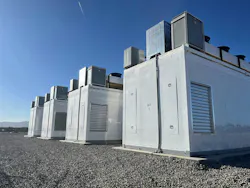
A new microgrid at U.S. Army Garrison Fort Bliss in Texas will provide resilience to approximately 40% of the installation’s critical facilities.
The system, which includes 15 MW of distributed energy resources (DER) and 8 MW of battery energy storage, will serve 142 buildings on the base.
The U.S. Army Corps of Engineers’ (USACE) Huntsville division (Huntsville Center) contracted with New Mexico Gas Company (NMGC), a large natural gas distribution utility, and Energy Systems Group (ESG), an Indiana-based sustainable energy solutions provider, to complete the work under a Utility Energy Services Contract (UESC).
A UESC enables federal agencies to partner with their utility to implement energy and water efficiency, renewable energy and demand reduction projects. Utilities audit, design, install and finance the projects, allowing agencies to modernize infrastructure without upfront capital investment.
The utilities are repaid over time through project-generated energy savings.
New Mexico Gas Co. will operate and maintain the microgrid.
Fort Bliss led the way for the Army’s microgrid initiative
Home to the 1st Armored Division and the 32nd Army Air and Missile Defense Command, Fort Bliss is one of the Army’s largest installations. Covering 1,700 square miles in West Texas and Southern New Mexico, the garrison is larger than the state of Rhode Island.
In 2013, Fort Bliss launched the Army’s first microgrid, a grid connected system with a 120 kW solar array and a 300 kW energy storage system. In partnership with El Paso Electric a 20-MW solar farm was added in 2015.
In the ensuing years, the Army installed microgrids at Fort Campbell, Fort Hunter Liggett, Camp Arifjan in Kuwait and Fort Cavazos (formerly Fort Hood), among others. It is also testing mobile microgrid systems designed to power field hospitals other microgrid-related projects at installations including West Point, White Sands Missile Range and Fort-Leonard Wood, Missouri.
In 2022, the Army announced its plans to install microgrids at each of its 130 bases worldwide by 2035, ensuring mission-critical facilities remain operational during an outage or emergency. Despite some shifts in energy policy from the Trump administration, this mission remains intact.
Resilience plus reduced energy and water consumption
In addition to the microgrid, the $58 million, 24-year UESC for Fort Bliss included the installation of LED lighting and water infrastructure upgrades.
All told, the microgrid, in conjunction with the water and energy conservation efforts, are expected to save the garrison more than $126 million over the 24-year UESC contract.
Military Microgrids in Focus at the Microgrid Knowledge Conference
May 6 Session Featuring US Army, Edison Electric Institute and Edged Infrastructure
MGK 2026 runs May 4-6 in Orlando
About the Author
 Kathy Hitchens
Kathy Hitchens
Special Projects Editor
I am a writer and special projects editor for Microgrid Knowledge. I have over 30 years of experience covering the renewable energy, electric vehicle, utility, technology, entertainment, education, and financial sectors. I have a BFA in Media Arts from the University of Arizona and a MBA from the University of Denver.