Canadian Government Invests $5.1M in Remote National Park Microgrid
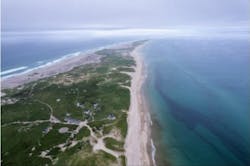
The Canadian Government is spending C$5.1 million to build a sustainable microgrid and reduce energy consumption at Sable Island National Park Reserve along the country’s remote southeast coast.
The microgrid will include a solar array, battery storage and two variable speed generators. The generators will respond to changing energy needs in real-time, reducing the total amount of diesel fuel consumed by 50%, according to a government statement.
“The sustainable microgrid project at Sable Island National Park Reserve, one of Canada’s furthest offshore islands, not only supports Canada’s transition to a cleaner economy but also stands as a powerful model of sustainable energy solutions for other remote locations - both within Canada and abroad,” Shannon Miedema, Member of Parliament, said in a statement.
Home to wild horses, seals, migratory birds and researchers
Established in 2013, Sable Island is Canada’s 43rd national park. Wild horses, one of the world’s largest colonies of grey seals, and a host of plants, birds and insects all call the island’s rolling sand dunes home.
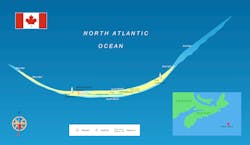
Located about 180 miles southeast of Halifax, Nova Scotia, in the Atlantic Ocean, the crescent-shaped island is only 27 miles long and less than a mile wide at its widest point. Essentially a thin sand bar, the length and shape of the island shifts with ocean currents and in the wake of ferocious Atlantic storms.
The constantly evolving coastline has caused more than 350 shipwrecks, earning the island the moniker the “Graveyard of the Atlantic.”
Accessible only by air or sea, Sable Island is home to a number of year-round park employees and researchers who live and work in a 12-building area dubbed Main Station.
Operations at Main Station are currently powered by a diesel generator.
Designed for the island’s unique conditions
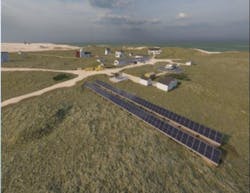
Construction on the microgrid began last fall and is expected to be complete this spring. It is the first such installation at an off-grid Parks Canada site.
Weather conditions, including dense fog and inconsistent sunlight, require an energy source to supplement the new solar array, thus the integration of variable generators.
Officials opted not to use wind turbines at the site to protect the more than 300 species of migratory birds that visit the island, which has been designated a Migratory Bird Sanctuary.
“Nova Scotians have a deep connection to Sable Island, and this project reflects our shared commitment to protecting its unique environment,” said Lena Metlege Diab
Canada’s Minister of Immigration, Refugees and Citizenship. “This project is a model for how we can achieve our climate goals while safeguarding the natural and cultural heritage that defines our province and country.”
Greening Canada’s operations
Funding for the projects comes from Canada’s Greening Government Fund, a key component of the country’s climate plan. The Fund promotes and supports innovative approaches that enable government departments and agencies to reduce greenhouse gas (GHG) emissions, meeting Canada’s 2030 Paris Agreement target and ultimately reducing all government GHG emissions to zero by 2050.
Through January 2025, it has provided approximately C$60 million to fund projects that reduce GHGs, including fleet electrification, the integration of advanced microgrid controls at remote northern and arctic government facilities, and the installation of geothermal and biogas-powered systems.
“Sable Island National Park Reserve’s sustainable microgrid project supports the Government of Canada’s Greening Government Strategy, said Julie Dabrusin
Canada’s Minister of the Environment, Climate Change and Nature. “The system’s unique design showcases Parks Canada innovation and leadership in actively responding to climate change and reducing greenhouse gas emissions in federal operations.”
About the Author
 Kathy Hitchens
Kathy Hitchens
Special Projects Editor
I am a writer and special projects editor for Microgrid Knowledge. I have over 30 years of experience covering the renewable energy, electric vehicle, utility, technology, entertainment, education, and financial sectors. I have a BFA in Media Arts from the University of Arizona and a MBA from the University of Denver.