First Nations Community Builds Integrated Renewable Energy Microgrid in Manitoba
The Canadian Federal Government is investing CAD$21.6 million (US$15.2 million) in a First-Nation led renewable energy microgrid in northern Manitoba.
The Sayisi Dene First Nation are constructing a large solar and energy storage system that will ultimately connect with the Tadoule Lake diesel generating station, creating the province’s first integrated hybrid microgrid.
The solar farm will include 1,032 bifacial solar panels, generating a total 1-year maximum capacity of 630 kWdc / 500 kWac. Generation is lower in winter months when there are fewer hours of daylight. .A 1 MW / 2.3 MWh DC battery energy storage system (BESS) will also be constructed on the site. The microgrid controls will enable grid-following capabilities when the system is integrated with the diesel generation station.
“Our community is looking forward to the benefits that will come with construction and commissioning this fall,” Kelly-Ann Thom Duck, Chief of Sayisi Dene First Nation, said in a statement. “Revenue generated from solar power will go toward community needs as we strive to become more sustainable and reduce our emissions. We also look forward to showcasing this project to other off-grid First Nations, sharing our learnings and experience executing the project.”
Renewable energy near the top of the world
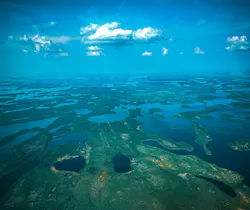
The Sayisi Dene (People of the East) First Nation community is one of the most isolated in Manitoba. Located more than 600 miles north of Winnipeg, the region is largely undeveloped. There are no year-round roads to the village of around 360 people, which is accessible primarily by plane, dog team or snowmobile.
Kisik Clean Energy, which builds renewable energy projects with indigenous communities, uses a network of winter roads to transport the microgrid’s components. The firm will build the system this summer.
The energy generated by the solar array will reduce the First Nation community’s reliance on diesel fuel, lowering energy costs for residents. The microgrid is expected to displace around 500 tons of carbon dioxide emissions annually.
“This project sets the stage for continued progress,” said Allan Danroth, president and CEO of Manitoba Hydro, which operates the Tadoule Lake diesel generating station. “By expanding renewable solutions and reducing diesel reliance, we are strengthening a more affordable, reliable and resilient energy future for communities across Manitoba.”
Funding for the microgrid was provided by Natural Resources Canada’s Clean Energy for Rural and Remote Communities (CERRC) program. With $453 million invested to date, CERRC aims to help Indigenous, rural and remote communities reduce their reliance on fossil fuels.
Additional funds were provided by Natural Resources Canada's Energy Innovation Program, Indigenous Services Canada and the Manitoba Indigenous Clean Energy Initiative.
“Our government is proud to support Sayisi Dene First Nation as they lead the way toward cleaner, more reliable energy for their community,” said Rebecca Chartand, Minister of Northern and Arctic Affairs and Minister responsible for the Canadian Northern Economic Development Agency and Member of Parliament. “Projects like this one reflect the Nation’s vision for greater energy independence, a cleaner future and lasting prosperity.”
About the Author
 Kathy Hitchens
Kathy Hitchens
Special Projects Editor
I am a writer and special projects editor for Microgrid Knowledge. I have over 30 years of experience covering the renewable energy, electric vehicle, utility, technology, entertainment, education, and financial sectors. I have a BFA in Media Arts from the University of Arizona and a MBA from the University of Denver.