How a Hydropower-Battery Storage Microgrid is Helping an Austrian Utility Achieve Goal of Energy Self-Sufficiency
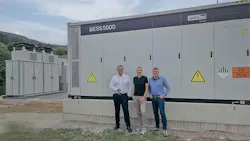
In the picturesque mountains of Austria, a new battery energy storage system (BESS) is transforming a hydropower plant into a microgrid.
The two BESS units will provide 10 MWh of total capacity and 4.8 MW of power for Murauer Stadtwerke (Murau Municipal Utilities).
The historic town of Murau is located along the Mur River, about 90 miles southeast of Salzburg. Home to just over 26,000 people, the region is a popular destination for outdoors enthusiasts and beer aficionados.
The city’s first hydropower plant was built in the early 1900s to power the local brewery. Several upgrades were made in the 1950s, 1980s and early 2000s, and today that plant generates roughly 18,000 MWh of electricity annually for local residents and businesses. It is part of a growing fleet of renewable energy resources owned and operated by Murau Municipal Utilities.
A model of energy independence
The utility operates its own power grid and more than 30 power plants across the Murau region, including two hydropower plants and multiple solar arrays and biomass generators. A third hydropower plant is under construction.
The utility also operates a district heating plant that generates 20 million kWh of heat each year. Biomass material is sourced within a 9-mile radius of the plant, which feeds a 6-mile long distribution network that includes the local brewery and the regional hospital.
Altogether the utility generates 400 GWh of electricity each year, more than enough to meet the region’s 120 GWh demand. Much of the excess energy is exported.
The utility has set its sights on making the region 100% energy self-sufficient by 2035.
The new BESS, with its islanding capabilities, is another step towards this goal.
If the grid fails, the BESS islands and sets the voltage and frequency reference. The hydropower plant automatically syncs to this reference and starts generating power again. With the hydropower plant handling the base load, the battery system manages load swings and absorbs excess energy, keeping the local microgrid running smoothly in islanded mode.
During normal operation, the BESS will support peak shaving, provide grid stabilization and help integrate renewable energy resources into the grid.
"This project is an important step towards strengthening the long-term security of our regional energy supply. Combining hydropower with a grid-forming battery storage system increases the resilience of our network while providing greater operational flexibility," said Günther Staber, managing director of Murauer Stadtwerke GmbH.
ADS-TEC Energy is supplying the fully integrated BESS, which includes the battery storage, power conversion system, transformer and energy management technology. The skid-mounted system is largely built and pre-configured at ADS-TEC’s factory, reducing on site installation time.
"Many regional utilities already operate strong renewable generation assets, such as hydropower or photovoltaic plants. The next step is enabling these assets to continue supplying reliable power even during grid disturbances," said Roland Klauss, CEO of ADS-TEC Energy Austria. "The Murau project demonstrates how existing hydropower generation can be intelligently combined with battery storage to enable reliable island operation."
The BESS is expected to be commissioned this summer.
About the Author
 Kathy Hitchens
Kathy Hitchens
Special Projects Editor
I am a writer and special projects editor for Microgrid Knowledge. I have over 30 years of experience covering the renewable energy, electric vehicle, utility, technology, entertainment, education, and financial sectors. I have a BFA in Media Arts from the University of Arizona and a MBA from the University of Denver.