Princeton University Microgrid, Which Once Overcame a Tropical Cyclone, is Improving Carbon Footprint and Resiliency
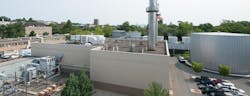
In October 2012, Princeton University made headlines worldwide when over 8 million electric customers lost power during Superstorm Sandy and the university’s microgrid kept its critical systems running, allowing the New Jersey-based Ivy League campus to serve as an electric refuge for faculty, students, staff members, first responders and local community members.
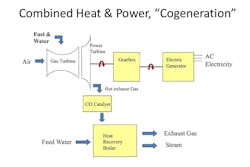
At the time, the campus was energized by an on-site 15-MW combined heat and power (CHP) plant–producing electricity and thermal energy in the form of heating and cooling from a single source of energy. The microgrid also included chilled water, thermal storage, a 5.4-MW solar photovoltaic farm and an advanced control system.
“It was a point of pride to get through this regional crisis and be a place of support, not an additional burden on the community,” said Ted Borer, former director of the Princeton energy plant, a job he held for 30 years.
Heat pumps and underground storage added to the microgrid
In 2021, in an effort to use less natural gas, Princeton installed heat pumps and a large underground storage system known as geoexchange –a “thermal piggy bank,” according to the university.
Princeton drilled over 2,000 boreholes on campus, each 600-850 feet deep.
The university also began replacing old steam pipes with hot water pipes. Instead of sending hot steam at 450 degrees Fahrenheit in underground pipes to warm up buildings, the system uses hot water pipes carrying water heated to 140 degrees.
With geoexchange, the heated water is sent underground through closed-loop piping. Underground rocks pick up the heat and store it. The temperature of the rock will increase from about 57 degrees Fahrenheit to 80 degrees Fahrenheit right beside the boreholes.
The heat pumps draw that 80-degree heat out of the ground, then raise the temperature to 140 degrees using grid power, and move it into buildings.
Heat pumps run on electricity–not natural gas–and move heat from one place to another, which is more efficient than directly heating the water, Borer said.
Energy storage isn’t just about batteries
Most people think storage is all about batteries, but thermal energy storage is cheaper, more durable, doesn’t use polluting chemicals and lasts for 50 to 100 years, Borer said.
The plant can also dispatch power to the grid or shut off chillers during periods of high demand, helping out the grid.
“I buy electricity in the middle of the night, run chillers to cool off 2.5 million gallons of water, then shut off the chillers when the grid is stressed,” he said. That means Princeton avoids drawing power from the grid during the most polluting and expensive hours. When it does this, Princeton’s system isn’t adding load to Public Service Gas & Electric’s grid during peak hours, helping the utility avoid building more generation or transmission and distribution assets.
Under the old steam system, by purchasing 1 unit of energy from the grid, the system could only move three-quarters of that energy into a building, Borer said.
New system is five times more efficient
With the new hot water, heat pump and geoexchange system, 1 unit of energy from the grid can move 4 units of energy into a building, making this system five times more efficient. The thermal storage tank yielded a 4-year payback.
“It was millions in investment, it paid back quickly and will last 50 to 100 years,” Borer said.
When Borer first started working for Princeton in 1994, the university was experiencing about 12 outages a year, mostly lasting an hour or less.
But these short outages could cause significant problems for the university.
The need for resilience at a university
“If you’re running a significant experiment or electron microscope, that might trash your research or equipment that needs to be running,” Borer said. “It can be excruciatingly expensive.”
Now the campus experiences one-tenth of the outages, perhaps fewer, he said. And the system has saved millions of dollars in utility costs.
The economic and environmental benefits of thermal energy have been around for a long time, especially at college and university campuses, said Rob Thornton, president and CEO of the International District Energy Association.
Electric generation started as CHP in cities, where power plants were located, and the excess steam or thermal energy produced in CHP plants was used to boost power plant efficiency. This was also an environmental strategy to improve air quality.
CHP’s benefits also include providing energy reliability and resiliency through a continuous supply of electricity and thermal energy for facilities when the grid goes down. It boosts grid stability, allows facilities to operate through outages and allows for microgrid deployment with a diverse generation mix.
With the growing demand for power from data centers and AI and electric rates increasing as a result of that demand, the benefits of thermal energy are “coming back into force,” Thornton said.
“What people are realizing is that thermal energy has value,” Thornton said. “Our thermal energy systems have shown that for decades. They don’t waste heat and by using thermal energy, you displace downstream emissions.”
Focus on On-Site Power and Mission-Critical Resiliency
Microgrid Knowledge Conference May 4-6 in Orlando
Where Energy Evolves
About the Author
 Lisa Cohn
Lisa Cohn
Contributing Editor
I focus on the West Coast and Midwest. Email me at [email protected]
I’ve been writing about energy for more than 20 years, and my stories have appeared in EnergyBiz, SNL Financial, Mother Earth News, Natural Home Magazine, Horizon Air Magazine, Oregon Business, Open Spaces, the Portland Tribune, The Oregonian, Renewable Energy World, Windpower Monthly and other publications. I’m also a former stringer for the Platts/McGraw-Hill energy publications. I began my career covering energy and environment for The Cape Cod Times, where Elisa Wood also was a reporter. I’ve received numerous writing awards from national, regional and local organizations, including Pacific Northwest Writers Association, Willamette Writers, Associated Oregon Industries, and the Voice of Youth Advocates. I first became interested in energy as a student at Wesleyan University, Middletown, Connecticut, where I helped design and build a solar house.
Twitter: @LisaECohn
Linkedin: LisaEllenCohn
Facebook: Energy Efficiency Markets