Solar-Powered Community Microgrid Proposed for Outage-Prone, Disadvantaged California Town
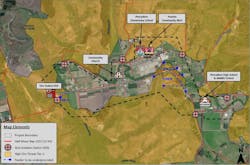
When Peninsula Clean Energy decided to pursue enrollment in Pacific Gas & Electric’s (PG&E) Microgrid Incentive Program (MIP), the community choice aggregator began by identifying which area needed resilience most.
The town of Pescadero, Calif.--a disadvantaged community plagued by wildfires, outages, flooding and public safety power shutoffs–kept rising to the top of the list. A remote coastal community located in unincorporated San Mateo County, the town is located at the end of a local feeder and residents are subject to frequent outages that sometimes last weeks.
Power outages affect safety, schools and food
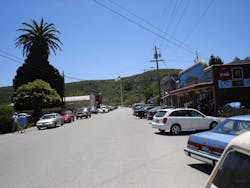
“The outages have a significant impact on the town’s safety, food and medical care. Kids couldn’t go to school,” said Ross Fisher, programs manager, distributed energy resources at the Peninsula Clean Energy, which is a not-for-profit public agency–a community choice aggregator (CCA) formed by San Mateo County and empowered to provide cleaner, often cheaper power than traditional utilities that PG&E distributes.
“This is a community truly in need of some kind of resiliency,” Fisher said.
If the project is accepted into the Microgrid Incentive Program, Peninsula Clean Energy will be eligible for technical aid and grants, which will help move the project forward. The program focuses on bringing community microgrids to disadvantaged and tribal communities vulnerable to power outages. The program allocated $79.2 million for PG&E, $83.3 million for Southern California Edison and $17.5 million for San Diego Gas & Electric. The utilities will receive $20 million, divided between the three, to cover their administrative costs for the program.
Peninsula Clean Energy filed its application for assistance under the program in mid-December, proposing a front-of-meter “true” microgrid, said Fisher. As proposed, the community microgrid will include 1.5 MW of direct-current (DC) solar, and 8 MWh of battery energy storage generation.
Project will serve 100 residents, businesses, fire station and schools
If it moves forward, the microgrid will provide resilience to about 100 residents and some commercial properties.
In addition, a middle school, an elementary school, fire station and the nongovernmental organization Puente de la Costa Sur–which provides food distribution and medical services–have been designated as critical facilities.
People outside the microgrid boundary can get help during outages by visiting one of the critical facilities, Fisher said.
“What’s unique about this project is it’s intentionally designed to be a true community microgrid providing community-wide resilience,” he said, adding that it's designed to provide 24 hours of resilience in the community, even after 10 years of battery degradation and load growth.
The Pescadero Community Microgrid is the biggest community microgrid proposed to date, in terms of the size of the population of the community being served, said Craig Lewis, executive director at Clean Coalition, which promotes clean, local energy and is working on this project.
“Importantly, the Pescadero Community Microgrid is 100% solar-driven,” he said.
To date, San Mateo County has contributed $3 million to the microgrid, and Peninsula Clean Energy has committed $10 million toward the $20 million project.
The CCA hopes to obtain the rest through the microgrid incentive program, which offers up to $1 million per project for eligible interconnection studies and equipment, up to $3 million per project for utility equipment and services that allow for the safe islanding of a community microgrid and up to $14 million for project engineering and development costs, including batteries and generation resources, third-party engineering and project management and property purchase or lease expenses. Also included in this “application incentive request” are application development grants of up to $25,000.
Peninsula Clean Energy seeks funding from PG&E to pursue the project
Through its application, Peninsula Clean Energy has asked PG&E to fund costs beyond the $13 million that’s already dedicated to the project, Fisher said.
PG&E hasn’t been able to provide cost information on the feasibility of interconnection.“That’s a challenge that’s yet to surface,” Fisher said. If upgrades are needed, it’s unclear what they would cost.
“We try to hold respectable contingencies and budgets within our overall cost budget to mitigate those unknowns,” he said.
The community microgrid is currently designed only to provide resilience, said Fisher. It’s unclear how it would operate during “Blue Sky” operations, when there’s no outage. The plan is to discuss this and the possibility of providing grid services with PG&E in the future.
PG&E in March announced the first round of funding available through the Microgrid Incentive Program in its northern California service territory.
Nine clean community projects to be first to receive funding
PG&E has said nine front-of-meter clean community microgrids serving 9,000 people will be the first to receive funding from PG&E under the program, which was authorized by the California Public Utilities Commission (CPUC) and will be implemented by the state’s three investor-owned utilities. When the utility announced that nine were chosen, it didn’t identify the projects.
Clean Coalition submitted five projects to the MIP program in PG&E and Southern California Edison (SCE) territory, and one of the projects –The Tomales West Community Microgrid in Marin County–has been chosen to receive funding from PG&E under this first round of grants, Lewis said.
The Pescadero Community Microgrid, if deployed, will stand ready to serve the whole town.
“We will always provide a minimum of 24 hours of resilience and be prepared for any outage,” Fisher said.
About the Author
 Lisa Cohn
Lisa Cohn
Contributing Editor
I focus on the West Coast and Midwest. Email me at [email protected]
I’ve been writing about energy for more than 20 years, and my stories have appeared in EnergyBiz, SNL Financial, Mother Earth News, Natural Home Magazine, Horizon Air Magazine, Oregon Business, Open Spaces, the Portland Tribune, The Oregonian, Renewable Energy World, Windpower Monthly and other publications. I’m also a former stringer for the Platts/McGraw-Hill energy publications. I began my career covering energy and environment for The Cape Cod Times, where Elisa Wood also was a reporter. I’ve received numerous writing awards from national, regional and local organizations, including Pacific Northwest Writers Association, Willamette Writers, Associated Oregon Industries, and the Voice of Youth Advocates. I first became interested in energy as a student at Wesleyan University, Middletown, Connecticut, where I helped design and build a solar house.
Twitter: @LisaECohn
Linkedin: LisaEllenCohn
Facebook: Energy Efficiency Markets