Georgia AME Church Celebrates Earth Day by Flipping the Switch on its New Microgrid
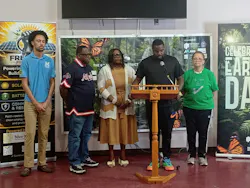
The New Bethel African Methodist Episcopal (AME) Church in Lithonia, Georgia, celebrated Earth Day by flipping the switch on its new solar and energy storage microgrid.
The 70.1- kW solar array, 41-kWh battery energy storage system and two bidirectional Level 2 EV chargers allow the church to serve as a resilience hub, giving community members a safe place to shelter, store refrigerated medicines, charge phones and vehicles, and power medical equipment during outages and emergencies.
“This project represents our commitment to being good stewards of creation and providing for our community in tangible ways,” Pastor Will Thomas, lead pastor of New Bethel AME Church, said in a statement. “When the lights go out in the neighborhood, we want New Bethel to be a place where people know they can come for safety and support. That’s what our church is called to do.”
A microgrid with zero up-front costs
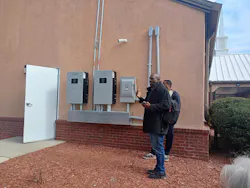
Better Tomorrow Solar installed the system in partnership with Georgia Interfaith Power & Light (GIPL), a nonprofit that assists communities of faith in implementing sustainable climate solutions, and the Sixth District AME Church, which administers all AME churches in Georgia.
Georgia Bright financed a Solar Energy Procurement Agreement letting New Bethel install the system with no up-front costs. Georgia Bright helps nonprofits and homeowners access tax credits, grants and group purchasing opportunities.
Resilient Energy Storage for C&I Microgrids
New from EOS
Additional support was provided by Black Voters Matter, a voting rights and community empowerment organization, and the Hive Fund, a social justice organization that provides grants to accelerate the clean energy transition.
“This project is about more than clean energy, it’s about ensuring that Black communities have the resources, infrastructure, and power to withstand crises and thrive in the face of climate challenges,” said Melinee Calhoun, state organizing manager for the Black Voters Matter Fund.
Caring for the community and creation
New Bethel AME is one of the first houses of worship in Georgia to use solar and storage technology to serve the community during times of crisis. It won’t be the last.
Twelve more AME congregations are primed to join the resilience hub pilot with GIPL. The Sixth District plans to install four more microgrids at AME churches by the end of the year.
“Historically, the AME Church has served as a beacon of hope and a safe haven for communities in times of crisis,” said Bishop Michael Leon Mitchell, presiding prelate of the Sixth District AME Church in Georgia. “In becoming Resilience Hubs, our churches are honoring that legacy while preparing for the climate challenges of tomorrow. This is about keeping our sacred call to serve and care for our neighbors alive.”
As climate-related disasters intensify — caused by wildfires, flooding, dangerous hurricanes and powerful winter storms — congregations across the country are transforming their facilities into community safe havens.
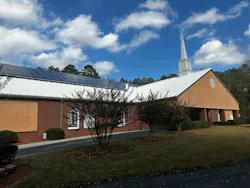
A number of United Methodist Churches (UMC), including the Methow Valley UMC in Washington, have installed solar and energy storage systems to align with the denomination’s Social Principles on creation care, which call on members to “be responsible stewards and to lovingly tend all that God has wrought.”
Together Louisiana, a grassroots organization of some 250 religious and civic groups, is building what it calls Community Lighthouses to aid vulnerable communities in and around New Orleans with flood recovery. They have 10 microgrids up and running and aim to build another 85.
“It is both inspiring and deeply meaningful to see the church lead by example in its commitment to environmental stewardship. When houses of worship become sources of power and safety for their communities, that’s when we see the true impact of renewable energy,” said Roji Aldashi, CEO of Better Tomorrow Solar.
Microgrids generate day-to-day benefits for churches
In addition to powering facilities during grid outages, houses of worship that install solar and energy storage microgrids also reap financial benefits.
The New Bethel AME microgrid is expected to supply 80% of the church’s energy demand, trimming utility costs by more than $15,000 annually. Those savings can be allocated to other church missions.
“The AME church is showing Georgia what’s possible when faith communities embrace both practical resource stewardship and climate justice,” said Hannah Shultz, program director for GIPL. “This installation goes beyond clean energy—it’s about building the infrastructure our communities need to weather the storms ahead, literally and figuratively.”
Resiliency Hubs as Critical Element Spurring Microgrid Deployment
Learn more at the Microgrid Knowledge Conference
Happening May 4-6 in Orlando
About the Author
 Kathy Hitchens
Kathy Hitchens
Special Projects Editor
I am a writer and special projects editor for Microgrid Knowledge. I have over 30 years of experience covering the renewable energy, electric vehicle, utility, technology, entertainment, education, and financial sectors. I have a BFA in Media Arts from the University of Arizona and a MBA from the University of Denver.