California City’s Civic Center Faced Critical Energy Question for its Master Plan. A Microgrid Answered it
Key Highlights
- - The Sunnyvale civic center's microgrid includes 736 KW of solar, 330 kWh of battery storage, and a 1-MW diesel generator to ensure energy resilience.
- - The microgrid dynamically manages energy resources in real time, switching between solar, batteries, and backup generators during outages.
- - The project enhances the city's ability to provide critical services during emergencies caused by natural disasters like wildfires and earthquakes.
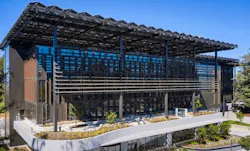
Facing population growth, aging buildings and persistent power outages, the city of Sunnyvale, Calif., created a master plan that aimed to improve sustainability, emergency services and resilience at the civic center–home to the city hall, library and public safety headquarters–and found that a microgrid could address many of the facility’s challenges.
Sunnyvale isn’t alone in seeking resilience. Several other cities share similar goals. For example, Houston is working to deploy microgrids in about 12 neighborhoods that need resiliency for police, fire, water and other critical services.
As Sunnyvale began its journey to modernize the civic center, it prioritized net-zero energy, resilience, water stewardship, carbon reduction and healthy buildings.
The city discovered that many of the ways to reduce energy use and environmental impact–adding a solar microgrid, for example–also could improve the facility’s ability to ensure critical services would continue to operate during emergencies.
Inviting stakeholders into the design process
To help the city choose its priorities, architecture firm SmithGroup began collaborating with engineering and design company PAE and worked with stakeholders to study various options, said Marco Alves, engineer and project manager at PAE.
PAE used a Choosing-by-Advantages methodology from Lean Construction Group to guide stakeholders in evaluating their design options and making “rational and informed” decisions, Alves said.
The team chose an all-electric design, rooftop PV and high-performance heating, ventilation and air conditioning systems to cut energy demand and help meet the city’s net-zero energy goals. Hensel Phelps was construction contractor on the project.
The design met the city’s “Reach building codes,” which go beyond the California State Code to advance carbon neutrality and sustainability and encourage electrification and high-performance building design, Alves said.
Civic center achieves net-zero energy and LEED Platinum certification

Through this process, the civic center buildings ultimately achieved net-zero energy and Leadership in Energy and Environmental Design (LEED) Platinum certification.
To achieve net-zero energy certification, stakeholders established an annual energy-use baseline, then sized a solar PV array to generate the same amount of energy the building consumes each year, Alves said.
The all-electric design posed a challenge: How could the Sunnyvale Civic Center keep operating during power outages?
A grid-connected microgrid consisting of 736 KW of on-site solar, 330 kWh of battery energy storage, a 1-MW diesel generator and microgrid controls was the answer. The system, which began operating in the fall of 2025, was designed to offset 100% of the facility’s annual energy use with solar and reduce peak demand by 73%.
Microgrid controls select resources in real time
To reduce the need for backup power, the microgrid controls choose which resources to use in real time and prioritize critical functions.
“The microgrid is a key component, like a computer that manages the building electrical system and can use any of the resources to keep the building operational when the utility grid is available and when it is not,” Alves said.
Outages are generally caused by heat waves and wildfires that may damage utility electrical equipment or the grid. Earthquakes can also cause power loss.
Microgrid controls turn on the diesel generator at night if needed
When there’s a power outage, the microgrid disconnects from the utility grid and switches to one of the energy-generating resources available, he said. During the day, if the PV can generate enough energy, the microgrid will use the battery and PV to keep the building operating. At night, if the PV and battery can’t power the building, the microgrid will turn on the generator.
All the buildings are served by stand-alone backup systems rather than by campus or district systems. Only the Sunnyvale City Hall has a microgrid. The Emergency Operating Center has two redundant generators that provide backup so there’s no need for a microgrid, Alves said.
Early in the project design, the city of Sunnyvale explored campus and district system options that could serve multiple buildings in the Sunnyvale Civic Center, but the campus/district system options were not the best fit for the city, so they were abandoned in favor of stand-alone systems, or systems that serve only a single building, he said.
The project allows the city to better serve its residents, Alves said.
“The project increases the resiliency of city hall and the city’s ability to provide the services and community support needed in the event of an emergency,” he pointed out.
About the Author
 Lisa Cohn
Lisa Cohn
Contributing Editor
I focus on the West Coast and Midwest. Email me at [email protected]
I’ve been writing about energy for more than 20 years, and my stories have appeared in EnergyBiz, SNL Financial, Mother Earth News, Natural Home Magazine, Horizon Air Magazine, Oregon Business, Open Spaces, the Portland Tribune, The Oregonian, Renewable Energy World, Windpower Monthly and other publications. I’m also a former stringer for the Platts/McGraw-Hill energy publications. I began my career covering energy and environment for The Cape Cod Times, where Elisa Wood also was a reporter. I’ve received numerous writing awards from national, regional and local organizations, including Pacific Northwest Writers Association, Willamette Writers, Associated Oregon Industries, and the Voice of Youth Advocates. I first became interested in energy as a student at Wesleyan University, Middletown, Connecticut, where I helped design and build a solar house.
Twitter: @LisaECohn
Linkedin: LisaEllenCohn
Facebook: Energy Efficiency Markets