Building Data Center Power EcoSystems: Siemens Smart Infrastructure, Emerald AI and Fluence Integrate Offering
Key Highlights
- The collaboration includes integrating Fluence battery energy storage to enhance energy flexibility and reliability for data centers.
- AI engineering models, including physics-based AI from PhysicsX, will help optimize power distribution and thermal management in real time.
- This initiative aims to address increasing energy demands and grid capacity constraints driven by the rapid growth of AI and data center infrastructure.
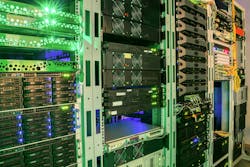
The digital infrastructure development side of German technology giant Siemens AG is investing in artificial intelligence (AI)-enabled data center energy management firm Emerald AI.
The strategic investment by Siemens Smart Infrastructure also is centered around a working partnership with Emerald AI to expand the company’s data center ecosystem with next-gen energy flexibility technologies. As part of the combination, Siemens Smart Infrastructure and Emerald AI also will integrate Fluence battery energy storage solutions into the data center offering.
“Scaling AI infrastructure isn’t just a computing challenge, it is equally an energy and infrastructure challenge,” said Ruth Gratzke, President of Siemens Smart Infrastructure U.S., in a statement. “As demand for AI processing accelerates, data center growth is increasingly constrained by grid capacity and interconnection timelines. Addressing this requires complex coordination across both the digital and energy domains.”
The Emerald AI collaboration will also bring in AI engineering modeling with startup PhysicsX. Altogether, the integration of energy flexibility, data engineering and AI is designed to build a reliable ecosystem for data center operators.
Emerald AI was launched last year with a $24.5 million seeding fund round by NVentures, the venture capital arm of chip and processing unit maker NVIDIA.
The PhysicsX capability applies physics-based AI to the design and operation of power distribution at data centers. For example, using these types of AI models can help engineers predict thermal behavior in complex busway systems in real time.
“Siemens is actively investing in key technologies and partnerships to expand the ecosystem required to scale AI responsibly and support the next generation of data center infrastructure,” Gratzke added.
Siemens Industry Inc. will be exhibitor at the upcoming Microgrid Knowledge Conference happening May 4-6 at the Renaissance SeaWorld in Orlando. Devin Geckeler, microgrid solution architect at Siemens, also will be speaking at the event in the session on “Streamlining Customer Behind-the-Meter Microgrid Interconnections.”
Click here for registration insights.
The North American Electric Reliability Council is warming of grid capacity shortfalls by 2028 due to skyrocketing AI and data center demand growth. Forecasters across the industry are predicting as much or more than 125 GW of new computing energy load by the early 2030s.
These feared power bottlenecks are driving many hyperscalers and other data center developers to work on potential off-grid and co-located energy projects.
About the Author
 Rod Walton, Microgrid Knowledge Managing Editor
Rod Walton, Microgrid Knowledge Managing Editor
Managing Editor
For Microgrid Knowledge editorial inquiries, please contact Managing Editor Rod Walton at [email protected].
I’ve spent the last 18 years covering the energy industry as a newspaper and trade journalist. I was an energy writer and business editor at the Tulsa World before moving to business-to-business media at PennWell Publishing, which later became Clarion Events, where I covered the electric power industry. I joined Endeavor Business Media in November 2021 to help launch EnergyTech, one of the company’s newest media brands. I joined Microgrid Knowledge in July 2023.
I earned my Bachelors degree in journalism from the University of Oklahoma. My career stops include the Moore American, Bartlesville Examiner-Enterprise, Wagoner Tribune and Tulsa World, all in Oklahoma . I have been married to Laura for the past 36-plus years and we have four children and one adorable granddaughter. We want the energy transition to make their lives better in the future.
Microgrid Knowledge and EnergyTech are focused on the mission critical and large-scale energy users and their sustainability and resiliency goals. These include the commercial and industrial sectors, as well as the military, universities, data centers and microgrids. The C&I sectors together account for close to 30 percent of greenhouse gas emissions in the U.S.
Many large-scale energy users such as Fortune 500 companies, and mission-critical users such as military bases, universities, healthcare facilities, public safety and data centers, shifting their energy priorities to reach net-zero carbon goals within the coming decades. These include plans for renewable energy power purchase agreements, but also on-site resiliency projects such as microgrids, combined heat and power, rooftop solar, energy storage, digitalization and building efficiency upgrades.