Utilize Coalition Boasts Big Tech Names Aiming to Make Better Use of Grid Power. What’s in it for Microgrids?
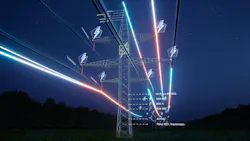
A new effort, Utilize Coalition, aims to leverage available grid resources to lower costs and meet greater demand, but some microgrid proponents say it will do little to help the microgrid industry.
The coalition includes Tesla, Google, Carrier, Renew Home, Verrus, GridLab and Sparkfund.
Taking advantage of 75 GW to 250 GW of excess capacity
The goal is to push more electricity through the existing system, which has 75 GW to 250 GW of extra capacity, said Ian Magruder, founder and executive director of Utilize Coalition.
Utilize focuses on state-level policy changes. One example is Virginia’s SB 621, legislation that calls for measuring and managing grid utilization and incorporating this information into the grid planning process, said Magruder. This is the first step in improving utilization, he said.
Supporting this idea is a new report from Brattle, The Untapped Grid, commissioned by the coalition and GridLab. The report estimates that boosting by 10% could cut electricity rates by roughly 3.4% compared to current rates, while allowing utilities to more efficiently develop complementary grid infrastructure.
Planners can boost the utilization of the grid by adding new load when and where there’s extra capacity, the report said.
The report said that it’s possible to add new loads when there is spare capacity. This is possible if new customers are flexible or if they can provide their own supplies during peak conditions.
The potential to lower costs, while speeding connection of new load
“The study has shown that improvements in system utilization through load growth can put downward pressure on rates for consumers, while accelerating the connection of new load and reducing financial risk,” the report said.
Brattle’s report also called for incentivizing technologies and behavioral changes to reduce the peak demand of existing loads. This can create new headroom on the system that can make way for adding new load.
What Utilize doesn’t do for microgrids
Microgrid proponents aren’t thrilled with the coalition’s efforts.
“I think there are a lot of unanswered questions about how effective this strategy will be,” said Cameron Brooks, executive director of Think Microgrid, which focuses on policy issues related to microgrids, said. “As it’s proposed, I don’t think it will change the landscape for microgrids in any meaningful way in the next few years.”
Arif Gasilov, partner, climate and environmental reporting at Gasilov Group, which covers energy market policy, said, “It's important to be precise about what it is and isn't. The coalition's core argument is grid optimization, not grid independence: they want to unlock idle capacity on the existing centralized grid to serve new load (mainly data centers) without as much new supply-side buildout.”
Utilize Coalition is promoting battery storage, distributed energy resources (DER) and demand flexibility, which overlap with microgrid components. However, the companies backing the coalition have different strategic directions, Gasilov said. Google needs faster interconnection. Tesla wants its Powerwalls dispatched into the grid services market and Verrus builds data centers.
“None of them have an economic interest in customers islanding from the grid, which is where the core microgrid resilience value sits,” Gasilov said.
The benefits of Virginia’s SB 621
Virginia’s SB 621, which is backed by the coalition, could be helpful to microgrids, Gasilov added. It would require utilities to quantify and report how much of the grid is actually used and to incorporate that into commission planning.
Under the measure, Dominion Energy and Appalachian Power must petition the state’s Corporation Commission to approve grid utilization metrics by Oct. 15, 2026.
The petition should include information on how the assessments are determined and assessments of the existing system performance for each metric. The measure calls for grid utilization metrics to include the ratio of distribution system peak load to total distribution grid capacity and the ratio of existing electric load to the potential deliverable electric load over the distribution system, according to the legislation. The two utilities should also include the percentage of kilowatt-hours lost during distribution or by the distribution system.
Freeing capacity to connect more microgrids?
One industry member pointed to other benefits of Utilize Coalition–in addition to its work supporting SB 621.
Farin Lari, energy networks specialist at management consultant Baringa, said efforts like Utilize can free up capacity to connect more microgrids and DERS. Once more DERs are online, paired with the right regulatory incentives, DERS can provide additional grid services and unlock new value streams, she said.
“Utilities will reduce costs and DER developers can connect faster and access revenue opportunities sooner,” Lari added.
Creating policies that enable state utility commissions and utilities to develop measures that boost grid utilization is more important than mandating specific technologies, Utilize Coalition’s Magruder said. Utilize is taking a technology-neutral approach.
“The first step is really to measure utilization because we're not doing that in America in any way,” he said.
About the Author
 Lisa Cohn
Lisa Cohn
Contributing Editor
I focus on the West Coast and Midwest. Email me at [email protected]
I’ve been writing about energy for more than 20 years, and my stories have appeared in EnergyBiz, SNL Financial, Mother Earth News, Natural Home Magazine, Horizon Air Magazine, Oregon Business, Open Spaces, the Portland Tribune, The Oregonian, Renewable Energy World, Windpower Monthly and other publications. I’m also a former stringer for the Platts/McGraw-Hill energy publications. I began my career covering energy and environment for The Cape Cod Times, where Elisa Wood also was a reporter. I’ve received numerous writing awards from national, regional and local organizations, including Pacific Northwest Writers Association, Willamette Writers, Associated Oregon Industries, and the Voice of Youth Advocates. I first became interested in energy as a student at Wesleyan University, Middletown, Connecticut, where I helped design and build a solar house.
Twitter: @LisaECohn
Linkedin: LisaEllenCohn
Facebook: Energy Efficiency Markets