How Behind-the-Meter Power May Ease the Grid Crisis
Key Highlights
- - U.S. power demand is projected to increase by nearly 40% by 2035, challenging existing grid capacity and infrastructure.
- - Utility expansion faces delays due to regulatory, permitting, and community opposition, risking project cancellations and operational costs.
- - Key enablers for on-site power include available land, reliable natural gas supply, and favorable permitting environments.
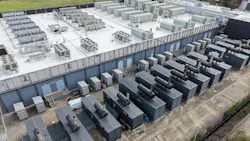
In the first two decades of the 21st century, the United States saw essentially flat demand across its grids. Then electric cars became increasingly common, data centers began popping into existence, and various market sectors moved to electrify as much as possible.
Immediately, overall power demand increased dramatically, leaving utilities and power distributors scrambling to meet demand. Simultaneously, sentiment began pushing back against utility expansion, as communities did not want to fund projects to serve new users or have additional distribution lines run through their neighborhoods.
The crisis is growing. It is estimated that the U.S. grid will need to increase capacity by nearly 40% to meet anticipated demand by 2035. Many think even that enormous figure is conservative. Even if the transmission wires and substations are present, the generating capacity isn’t.
This state of affairs creates significant challenges for any company wishing to build a new facility or expand production. Depending on the energy market, once the proper paperwork has been submitted and large fees paid, a project may sit in a queue for several years before an interconnect study is completed by the local utility. After that study is done, owners may have to wait another five to seven years to receive power. Entire projects are being canceled for lack of power, and the opportunity cost of lost operations can be staggering,
Yet a solution is at hand.
In fact, the electricity authority in Texas, ERCOT, recently adopted a new “Batch Interconnect” process by which individual applications for power are no longer considered. On a system that currently handles 95 GW, the total requested power now stands at over 474 GW. The governor of Texas, Greg Abbott, is demanding more rigorous evaluation of power demands to protect citizens’ access to power and grid stability. The memory of a week of no power in Texas during deadly Winter Storm Uri in 2021 is fresh in the minds of policymakers and citizens of Texas.
Alternative power option
The alternative to utility power is a dedicated, on-site power solution. While such a concept has historically been difficult and expensive to implement, it is now becoming far more viable for loads ranging from tens of megawatts to a gigawatt, with numerous advantages compared to utility power:
- Long-term power can be provided within 12-18 months.
- The power source is specifically designed to match the plant load, with uptime and redundancy matching user requirements.
- Dedicated power is not subject to dips, sags, and interruptions caused by other users.
- The power system can be capitalized, installed, and operated by a third party that carries the cost of investment and maintains the unit. The same provider handles air permitting.
- Such arrangements are backed by a power purchase agreement (PPA) that includes contractual commitments on uptime, something a utility would never consider.
- The power source can be scaled as the plant grows, allowing a site to start small and later expand their production and increase the power infrastructure in future phases.
- High-temperature exhaust energy can be recovered through combined heat and power (CHP) systems to drive steam turbines for additional power generation, and/or to provide steam and process heat, substantially increasing total system efficiency.
Many of these behind-the-meter (BTM) systems have been installed and are successfully operating today.
Key enablers for self-powered facilities
There are certain base requirements that make dedicated alternative power an economic and viable solution. While it is possible to pursue a BTM solution for most any application, it may take longer to implement and be more costly in the absence of these three enablers:
- Available land: Owned or adjacent land available for lease or purchase.
- An accessible source of non-curtailable natural gas: Pipeline pressure does not have to be particularly high (90 PSI or higher), but the gas supply must have the necessary volume and be reliable.
- A location with reasonable permitting rules: Obtaining air permits in some locales can take much more time and effort than others.
Evaluate the options
While utilities have historically been the only viable source of significant power, the current power market landscape is changing that paradigm rapidly. This situation has owners evaluating their options, and fortunately a new fleet of efficient, reliable generator sets are now available to address this demand. The equipment can be incorporated into a capable, fit-for-purpose power delivery system that is custom designed to meet the load and reliability demands of the user.
This type of dedicated power plant solution is structured to let owners avoid most of the upfront capital expense, as well as the operation of the generating system. This frees the site to focus their money and expertise on the processes and equipment producing their product, and it provides a guaranteed source of timely, dedicated, and reliable power priced at a known rate.
If you have ample time and patience, waiting for the expanded grid is an option. If your interests demand a faster and potentially more cost-effective solution, a private BTM solution may be the right choice.
How to Talk to Your CFO about Batteries and Microgrids. . .
. . . Without Losing the Room
New Microgrid Knowledge Perspective from ELM Microgrid
About the Author
Patrick Bartell
Patrick Bartell is the VP of business development at Atlas Energy Solutions, where he uses his 30+ years of experience to help industrial, data center, and large-load customers solve complex power challenges with clarity and confidence. Bartell and his team deliver customized, cutting-edge solutions that accelerate customer success, support sustainability goals, and reduce risk across the full power development lifecycle.