Sharing Power in the Big Easy: Together New Orleans to Build $30 Million Virtual Power Plant
On December 18, the New Orleans city council unanimously approved a resolution to establish a citywide distributed energy resources (DER) program. The Neighborhood Power Plan will see $30 million invested in the creation of one of the largest community-based virtual power plants (VPP) in the deep south.
Under the Neighborhood Power Plan, solar and battery systems will be installed at approximately 1,500 homes and 250 community institutions across the city over the next three years, forming the backbone of the VPP.
VPPs use advanced software to connect and coordinate DERs—everything from rooftop solar panels and home batteries to electric vehicles and smart appliances. By aggregating tens, hundreds or even thousands of DERs into a single, dispatchable resource, VPPs can reduce demand or add supply during peak hours, keeping the grid resilient and balanced.
It is expected that solar and battery installations will begin in 2026.
A community-led initiative
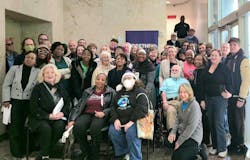
The initiative was spearheaded by Together New Orleans and the Alliance for Affordable Energy. Together New Orleans is a coalition of faith, labor and community groups dedicated to addressing issues facing the community, such as cost of living, jobs creation and power resilience. The Alliance for Affordable Energy is a Louisiana-based organization that advocates for equitable, affordable and environmentally responsible energy.
Together New Orleans and the Alliance for Affordable Energy have been working towards this goal since Hurricane Ida swept ashore as a Category 4 storm in 2021.
“The way this program came about is remarkable,” Arushi Sharma Frank said in a statement. Frank is a VPP expert who consulted with Together New Orleans as an architect of the proposal.
“This entire docket was initiated by community organizations who led the analysis and the most important filings alongside subject matter experts from around the country. It’s a rare example of communities originating and guiding a major utility reform that is open access and effectively a public good,” she said.
No rate increases for customers
Funding to build the virtual power plant will come from settlement dollars paid by Entergy Louisiana, the local electric utility. Ongoing costs will be handled through the utility’s existing Energy Smart customer energy-efficiency funding program, so customers will not see a rate increase as a result of the project.
The Neighborhood Power Plan includes:
· $28 million in upfront incentives to install solar-plus-battery systems.
· $2 million for program administration and implementation.
· At least 40% of residential funding reserved for low-to-moderate income households.
· Equal investment in homes and community institutions.
· Ongoing performance payments for participants who provide power to support the grid during emergencies.
· A requirement that systems remain available for community and grid support over multiple years.
“This is a historic step toward protecting lives in New Orleans,” Nathalie Jordi of Together New Orleans said in a statement. “Instead of waiting for the grid to fail again, the city is building neighborhood-level power that keeps people safe when it matters most.”
Community lighthouses
Together New Orleans is part of Together Louisiana, a statewide network of some 250 religious and civic groups that is also one of the state’s largest grassroots organizations.
The organizations have been constructing what they call Community Lighthouses—resilience hubs with a community scale solar and battery storage microgrid. Sited at churches or community centers, the lighthouses power heating or cooling stations and offer community members a place to charge their devices. They also enable food and medical aid distribution as well as other critical services during extended power outages.
Microgrids are similar to VPPs in that they use connected DERs to power a defined area, such as a college campus or business, independently of the main power grid – providing resilience to the microgrid owner.
VPPs, on the other hand, use an intelligent control system and bidirectional technology to aggregate energy from networked resources located at multiple sites, bundling together what could be hundreds of discrete power sources into one that acts just like a centralized power plant would.
The groups plan to build 86 lighthouses in New Orleans alone —enough so that every resident of the city can walk to a resilience hub within 15-minutes.
A new partnership to accelerate the growth of VPPs in the U.S.
In other VPP news, Leap, a leading platform for building and scaling virtual power plants (VPPs), and Enel North America, one of the largest VPP aggregators in North America, announced a new partnership to accelerate the growth of VPPs across the U.S.
The companies plan to connect existing commercial and industrial (C&I) DER capacity to utility demand response programs to help balance the grid in real-time and provide C&I customers with new revenue opportunities.
“At a time of surging energy demand from data centers, electrification, and extreme weather events, it’s essential that we tap into the flexible capacity already available on the grid to maintain resiliency and keep energy costs down,” Jason Michaels, CEO of Leap, said in a statement. “Working with Enel, one of the global leaders of the energy transition, allows our partners to access new markets through Leap’s automated platform, enabling more commercial customers to get rewarded for providing fast, cost-effective support to the grid.”
The initiative will launch with Enel-managed demand response programs in Washington, Arizona and the Tennessee Valley.
About the Author
 Kathy Hitchens
Kathy Hitchens
Special Projects Editor
I am a writer and special projects editor for Microgrid Knowledge. I have over 30 years of experience covering the renewable energy, electric vehicle, utility, technology, entertainment, education, and financial sectors. I have a BFA in Media Arts from the University of Arizona and a MBA from the University of Denver.