Four Microgrids for Healthcare Centers in Southern Arizona that have No Backup Power
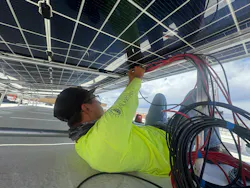
In the first six months of 2024, four healthcare centers operated by Chiricahua Community Health Centers in Douglas, Arizona, experienced more than 10 power outages that lasted from several minutes to several hours, and with no backup power, the centers couldn't serve patients–many of them low-income–and risked losing refrigerated vaccines and medicine.
Douglas is also vulnerable to extreme heat and a moderate to high risk of wildfires that can prompt public safety power shutoffs by the local utility.
“Imagine a patient being in a dentist chair with the Novocain fully administered,” said Dennis Walto, chief external affairs officer at Chiricahua Community Health Centers, whose healthcare centers in Douglas include Douglas Medical and Dental Clinics, a pharmacy and administrative facilities. “The dentist is proceeding with filling your cavity, or the cavity of your child, and the lights go out. No one is sure if this is going to be a couple of minutes or a couple of hours. Everything stops,” he said.
In addition, the electronic records system is down, preventing staff from rescheduling patients.
The centers are Chiricahua Douglas Pharmacy & Acute Care Clinic, Chiricahua Ginger Ryan Clinic, Chiricahua Pediatric Center of Excellence and Chiricahua Administration Center.
Solar microgrids at three of the four facilities began operating in July and August. This ensures patients get the care they need and no medicine is destroyed.
The other center is expected to be operating in September or October, said Andrew MacCalla, co-founder and CEO of Collective Energy, which financed and installed the microgrids.
One-day power outages cost healthcare centers up to $500,000
A one-day power outage can cost the four healthcare centers about $500,000 in vaccines and medicines that require refrigeration, MacCalla said.
This is especially troubling for local residents because Chiricahua is the only Federally Qualified Health Center in Cochise County. It provides healthcare to a rural population of 125,000 people on the U.S.-Mexico border.
In addition, the centers lose about $5,000 in revenue if they are shut down for a day because patient appointments would be canceled, he said.
In August, heavy rain flooded the streets and part of the grid went down, but the microgrids kept operating, said MacCalla.
“Healthcare access, quality and utilization will all be positively impacted by the safe and reliable power now available,” Walto said. “Health services and scheduling can proceed uninterrupted.”
Energy storage boosts resilience at the facilities
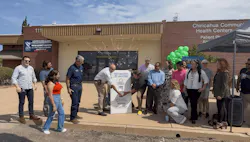
Together, the solar microgrids include solar panels that provide about 200 kW of electricity annually and supply 100% of the building's electricity, while 560 kWh of energy storage will allow the healthcare centers to operate when the grid is shut down.
Chiricahua Community Health Centers made no up-front payments for the $1.3 million microgrids. Each of the four facilities is paying Collective Energy a monthly amount lower than pre-microgrid electricity bills for the solar through energy services agreements, MacCalla said.
BuildUS–a philanthropic initiative that focuses on the clean energy transition– provided a grant that allows Chiricahua to pay nothing for the battery storage for the first five years. After that, the healthcare center makes lease payments for the energy storage.
Other partners on the project include CHARGE Partnership, a group of three organizations that focus on providing solar microgrids to health centers nationwide and Invest in Our Future, which supplied some grant funding for pre-development. American Microgrid Solutions is the technology partner.
Because Collective Energy is a mission-driven developer, it receives low-interest loans — as low as 2% —from foundations like the Kresge Foundation, MacCalla said.
Funding was aided by investment tax credits through the Inflation Reduction Act (IRA).
Tax credits from the IRA help with costs and leasing
Collective Energy received a 40 % investment tax credit for the solar and storage under the provisions of the IRA. That includes the standard 30% credit plus a 10% bonus because the projects are located in “energy communities” with high poverty rates.
The developer also used an IRA provision called transferability to transfer the value of the investment tax credit to a third-party buyer in exchange for cash. The tax credits allowed Collective Energy to offer Chiricahua a “lease to own” option with an accelerated 20-year timeline. Chiricahua also has the option to buy the systems after five years.
For MacCalla, installing solar microgrids is part of a company mission he developed after 20 years in disaster relief, bringing medicine to healthcare centers in the aftermath of disasters. Many centers were closed after losing power during storms or other emergencies.
“I saw a problem time and time again and I knew there was a solution,” he said.
MacCalla is now working on about 80 similar projects for healthcare centers across the U.S., including Hawaii and Puerto Rico.
“Microgrid power provides Chiricahua staff the stability and peace of mind that we can continue to do our work every single day and do what we do best, which is to focus on prevention all throughout Cochise County,” Walto said.
About the Author
 Lisa Cohn
Lisa Cohn
Contributing Editor
I focus on the West Coast and Midwest. Email me at [email protected]
I’ve been writing about energy for more than 20 years, and my stories have appeared in EnergyBiz, SNL Financial, Mother Earth News, Natural Home Magazine, Horizon Air Magazine, Oregon Business, Open Spaces, the Portland Tribune, The Oregonian, Renewable Energy World, Windpower Monthly and other publications. I’m also a former stringer for the Platts/McGraw-Hill energy publications. I began my career covering energy and environment for The Cape Cod Times, where Elisa Wood also was a reporter. I’ve received numerous writing awards from national, regional and local organizations, including Pacific Northwest Writers Association, Willamette Writers, Associated Oregon Industries, and the Voice of Youth Advocates. I first became interested in energy as a student at Wesleyan University, Middletown, Connecticut, where I helped design and build a solar house.
Twitter: @LisaECohn
Linkedin: LisaEllenCohn
Facebook: Energy Efficiency Markets