Sonoma State University’s Microgrid Graduates to Operational

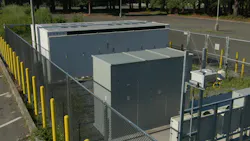
Sonoma State University (SSU) and TotalEnergies unveiled one of Sonoma County’s largest renewable energy microgrids this week in California. The installation includes 4.1 MW of solar carports and a 1.55 MWh battery energy storage system.
TotalEnergies, an integrated energy company with operations spanning fossil fuels to renewables, built the system under a 30-year power purchase agreement (PPA).
“Together with SSU, we are building more than just modern energy infrastructure, we’re inspiring a cleaner, more resilient future for the next generation of climate leaders," Eric Potts, managing director of TotalEnergies Distributed Generation USA, said in a statement.
SSU is part of the California State University (CSU) system, which is on a mission to achieve net-zero carbon emissions across its 22 campuses by 2045.
The Sonoma State microgrid is the latest partnership between a CSU school and TotalEnergies. The firm has been integral in advancing CSU’s net-zero efforts over the past decade, completing more than 20 MW of solar and battery storage projects across the system’s campuses.
Resilience, energy savings and an educational opportunity
Nestled in the heart of Northern California’s wine country, Sonoma State University is subject to multiple public safety power shutoffs (PSPS) each year. A PSPS is when the utility temporarily cuts power to certain areas to reduce the risk of utility equipment causing wildfires.
The microgrid will provide resilience during these events, ensuring critical campus infrastructure remains operational by seamlessly switching to on-site generation and battery storage.
TotalEnergies erected solar carports across five campus parking lots and expects the arrays will generate in excess of 7.9 GWh of clean energy during the first year.
Beyond resilience benefits, the microgrid will help SSU lower its annual utility costs. Excess energy stored in the site’s battery system will be deployed during peak demand hours when utility rates spike, saving the university an anticipated $5 million in the first five years.
Those funds will instead be invested in the university’s Green Revolving Fund, which funds campus infrastructure improvements and research.
The microgrid will also be a living laboratory for students and faculty studying clean energy.
“Projects of this scale are complex and often take years to move from concept to completion,” said Dana Twedell, SSU’s associate vice president for facilities operations and planning. “TotalEnergies was a collaborative and responsive partner, working closely with us to navigate challenges and bring the project across the finish line.”
The power of the PPA
TotalEnergies fully financed the microgrid and its components — with zero upfront capital costs to the university. TotalEnergies will own, operate and maintain the installation for the duration of the agreement, selling the clean electricity it generates to the university at a reduced rate.
Power purchase agreements typically establish electricity rates for the entire term at the outset, insulating customers from utility price volatility and making budgeting easier.
This financing mechanism is an increasingly common way for schools, healthcare facilities, agricultural operations, and local governments to access clean energy via microgrids. In North Carolina, Roanoke City Schools recently announced a 25-year power purchase agreement with Secure Solar Futures to install solar and energy storage systems on several of its K-12 schools.
About the Author
 Kathy Hitchens
Kathy Hitchens
Special Projects Editor
I am a writer and special projects editor for Microgrid Knowledge. I have over 30 years of experience covering the renewable energy, electric vehicle, utility, technology, entertainment, education, and financial sectors. I have a BFA in Media Arts from the University of Arizona and a MBA from the University of Denver.