Paskenta Band of Nomlaki Indians Take Next Step Towards Energy Sovereignty
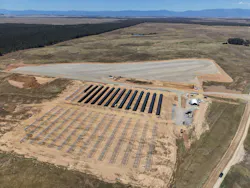
Early next year, the Paskenta Band of Nomlaki Indians will switch on a powerful new and multiple-resource microgrid that will provide resilience for both the Northern California tribe’s commercial campus and its neighbors.
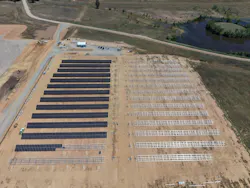
The microgrid will include a combined 4.5 MW of ground-mounted DC solar, a 3 MW/15 MWh long duration energy storage (LDES) system from EOS and a 3 MW/6 MWh lithium ion energy storage system.
The Paskenta Reservation is located in Corning, about 90 minutes north of Sacramento. The project, which broke ground in 2024, is being built about a mile southwest of Rolling Hills Casino and Resort, a large tribal-owned commercial campus that also includes two hotel towers, an equestrian center, golf course, brewery and distillery, RV park and a travel center.
The region is rural and prone to wildfires and public safety power shutoffs. Thanks to its close proximity to Interstate 5, the casino campus has served as a safe haven for tribal members as well as those in the surrounding communities. FEMA has even established a temporary field office on the reservation during significant wildfire outbreaks.
“This microgrid is about making sure the tribe and our neighbors have reliable power during the moments that matter most, whether that’s a wildfire, a heat wave, or a peak demand event on the grid,” Tribal CEO Damon Safranek said in a statement.
OATI’s GridMind will integrate the system’s DERs
The microgrid consists of two systems located on opposite sides of the road from one another. A grant from the California Energy Commission (CEC) is paying for 3.5 MW of solar and the LDES. Money from the Federal Emergency Management Agency’s (FEMA) Building Resilient Infrastructure and Communities (BRIC) program is funding the balance of the solar and the lithium ion storage.
“The systems can be operated independently, but we intend to operate them collectively, because the microgrid is more powerful when pulling all these resources together,” Jacob Schueller, development executive at Woven Energy, told Microgrid Knowledge.
Tribal energy developer Woven Energy is leading the project.
Energy solutions provider Open Access Technology International (OATI) and the Paskenta announced today that OATI’s GridMind platform will be used to manage and optimize the microgrid’s multiple distributed energy technologies.
The platform will enable the tribe to make the most of both the zinc-bromide LDES and lithium ion battery technologies, integrate the two solar systems, and support microgrid functionality such as islanding.
It will also simplify the process of adding additional DERs to meet increased demand as the population or number of businesses on the reservation grow.
The Paskenta will self-operate the microgrid once it’s operational early next year. OATI and Woven Energy will provide training and on-going support.
“This project is an awesome example of success, and it's something that can be a blueprint or a template for many other tribes to follow,” David Heim, Chief Strategy Officer at OATI, told Microgrid Knowledge. “How it was developed, the use and the value it's bringing to the community, the virtue of combining multiple DERs, how the funding happened, the number of different parties that are working together to make it happen—there are a million different layers of how this could be a template for success.”
The Confederated Tribes of the Colville in northern Washington state are also using GridMind to control their microgrids.
Lower energy costs and greater energy sovereignty
While the Paskenta microgrid will provide resilience during grid outages, it is also designed to lower the tribe’s energy costs.
“This facility is fundamentally about resilience,” Schueller said, “but we are really optimizing on a day to day basis for reduction of demand.”
The grid connected system will also generate revenue for the tribe by selling energy in wholesale energy markets.
Perhaps most importantly, the microgrid will give the Paskenta greater control over their own energy resources rather than relying solely on the broader grid. The tribe is in the process of creating its own utility and utility regulatory body with the ultimate goal of achieving energy sovereignty.
But that doesn’t mean it’s building a wall between the tribe and key stakeholders. Rather, the Paskenta are collaborating with the California Public Utilities Commission, the grid operator and the local utility to ensure the tribal utility becomes a peer entity — not one isolated from the rest of the grid.
“Energy is the foundation that everything else in our region depends on; homes, businesses, healthcare systems, emergency services, and the natural systems we have a responsibility to protect,” Safranek said.
About the Author
 Kathy Hitchens
Kathy Hitchens
Special Projects Editor
I am a writer and special projects editor for Microgrid Knowledge. I have over 30 years of experience covering the renewable energy, electric vehicle, utility, technology, entertainment, education, and financial sectors. I have a BFA in Media Arts from the University of Arizona and a MBA from the University of Denver.