San Diego Gas & Electric Installing Battery Storage, Microgrids to Handle Demand Challenges
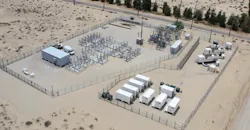
Utility San Diego Gas & Electric is building 40 MW of energy storage capacity and four new microgrids to improve grid resiliency and offset rotating outages during summer peaks.
SDG&E is adding a 40-MW energy storage facility in Fallbrook, California. The utility company also is starting work on the Elliott project, the first of four solar and battery storage microgrids planned at SDG&E substations.
The planned microgrids, which will operate independently and in tandem with SDG&E’s regional grid, will allow the California Independent System Operator (CAISO) to dispatch resources as needed to help maintain a balanced supply and demand of energy statewide. This includes Elliott Microgrid’s ability, once completed, to power Fire Station 39, the Tierrasanta Public Library/Cool Zone, Tierrasanta Medical Center, Jean Farb Middle School, Canyon Hills High School, and Tierrasanta and Kumeyaay Elementary schools.
“Innovations like storage and microgrids are vital to building a more resilient electric grid that can extend the availability of renewable energy into peak demand hours and better prepare communities to manage through emergencies,” said SDG&E Vice President of Energy Innovation Miguel Romero at the Tierrasanta substation during the Elliott Microgrid groundbreaking event.
Currently, SDG&E states it has roughly 95 MW of available utility-owned energy storage with another 200+ MW in development. The Fallbrook facility will be able to store enough energy to energize 25,000 homes.
These energy storage efforts align with California’s increased investment in energy storage, as the California Energy Commission projects 52,000 MW of battery storage will be needed by 2045. The agency states that from 2018 through mid-2025, California increased its battery storage from 500 megawatts (MW) to over 17,000 MW to serve the grid.
About 4% of the electricity supply during peak demand was reportedly supported by these batteries to reduce the chances of rotating outages. SDG&E adds that within its service territory, as much as 7% of the regional load was served by utility-scale battery energy storage systems (BESS) during peak hours amid the summer heatwave.
The California Public Utilities Commission (CPUC) previously approved SDG&E’s microgrid and energy storage requests as part of its $200 million Microgrid Incentive Program (MIP) to fund clean energy microgrids. SDG&E, alongside two other California utility companies, was supported by the CPUC in the development of community microgrids in vulnerable communities that are likely to encounter power outages.
The advancement of BESS will help SDG&E capture energy from renewable resources such as wind and solar when abundant during the day, and send additional supply back to the grid when mostly needed during severe weather, when grids are most vulnerable to surging demand.
When the Grid Can't Wait: Unlock Solar Capacity with DC-Coupled Storage
New White Paper by ELM Microgrid
About the Author
 Eric Moody
Eric Moody
Staff Writer
Eric is a staff writer for the Endeavor Business Media Energy group, which includes EnergyTech, T&D World, and Microgrid Knowledge media brands. He is a Philadelphia native with over nine years of experience in multimedia and print journalism throughout the news industry. He graduated with a B.S. in Communication Studies from Mansfield University of Pennsylvania.