A Forward-Looking Tribe, a $4.7 Million DOE Grant and a Long-Duration Energy Storage Demonstration
In April, $4.7 million in U.S. Department of Energy (DOE) funding for a long-duration energy storage demonstration in a tribal microgrid in Wisconsin officially moved forward.
In January 2025, the Trump administration had put a hold on the funds.
The DOE awarded $3.6 million to Invinity Energy, which will provide the battery and $1.1 million to muGrid, which supplies microgrid controls. The two companies will provide a 20% cost share, mostly in equipment and labor.
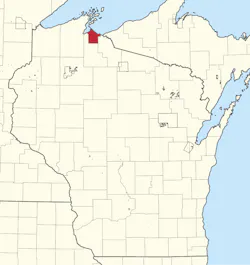
The funding, from the DOE’s National Energy Technology Laboratory, will help pay for a building-level microgrid on the Bad River Band of Lake Superior Chippewa reservation in Ashland, Wisc., a forward-looking tribe now pursuing several microgrid and clean energy projects.
Bad River Band is focused on clean energy projects
“The tribe has been very progressive in their thinking about energy usage and electricity in their infrastructure projects like transportation, food sovereignty and housing,” said Amy Simpkins, CEO, muGrid Analytics, which has been working with the tribe since 2017 on solar and battery projects.
Daniel Wiggins Jr., former energy manager for the tribe and now executive director of the Midwest Tribal Energy Resources Association, earlier led the installation of three building-level solar and storage microgrids at the tribe’s health clinic, wastewater treatment plant and administrative building. They are now operating, she said.
“When he was at Bad River Band he was a visionary about what types of things were possible under his watch,” Simpkins said.
Economically disadvantaged, the tribe is located at the end of a feeder line and has experienced long outages.
The grants to muGrid and Invinity Energy stipulated that a host site would be needed to demonstrate the long-duration energy storage technology, and the tribe offered up one of its not-yet-identified buildings.
Testing Invinity’s battery for commercial and industrial applications
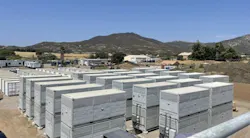
The demonstration will test a 2-MWh Invinity Energy System Endurium Enterprise vanadium flow battery system for use in commercial and industrial applications. If the tribe chooses a building with existing solar, the solar will be integrated into the microgrid.
U.S.-manufactured Invinity Energy batteries have been deployed in utility-scale applications, where they are cost-effective, but the hope is to test them in applications ranging from 30 kW to 5 MW, Simpkins said. If they prove to be cost-effective, this will allow the company to expand its market to commercial and industrial applications.
“Flow batteries have existed for a long time, but it’s a pretty immature technology; that’s why DOE is funding the battery. They want to see more of these on the market,” she said.
Vanadium flow batteries from Invinity Energy, which are modular, store energy in an aqueous solution and don’t degrade, according to the company.
Battery capacity can be easily expanded
The batteries, which will provide demand charge management, peak shaving, resilience and potentially solar optimization for the reservation, are unique not only because they provide long-duration storage, Simpkins said. Their capacity can be expanded less expensively than lithium-ion batteries.
“A liquid electrolyte in the flow batteries is a relatively simple vanadium acid solution. It's not expensive to make, relatively speaking. It's also non-toxic,” she said. It’s relatively inexpensive to expand battery capacity. All that’s needed is a larger tank that can hold more liquid electrolyte.
“That's a cheap fluid as opposed to lithium batteries. It's just linearly expensive to add more lithium,” Simpkins said.
LIthium-ion batteries are generally the battery choice for microgrids because they’re less expensive than other options, but new technologies like flow batteries are advancing.
Data collection about battery deployment
During the demonstration project, participants will collect data on when and how much the battery is charging and discharging, its efficiency and any outages.
It will seek to understand when the grid goes down, how the battery steps in to support the building—and for how long—and how much energy it discharges during that time, for example.
muGrid’s existing microgrid controller has never been used to control flow batteries, Simpkins said. The demonstration will test the controller’s ability to perform that function.
A separate microgrid is up and running on tribal lands
The earlier microgrid project for the tribe, led by Wiggins, with muGrid’s involvement, was commissioned in May 2021 and provides both resilience and economic benefits to the tribe.
MuGrid also helped win a Wisconsin Office of Energy Innovation grant to study a large-scale medium-voltage minigrid that includes the main core of tribal facilities. MuGrid completed the study in June 2022, and it’s informing the Bad River Band’s energy strategy.
The Bad River Band’s reservation is a good choice for this type of demonstration project because their tribal council is very sophisticated in how it tackles energy issues, Simpkins said.
“They've done a variety of innovative energy demonstration projects that are proving that you can do them and they’re leading other tribal nations,” Simpkins said.
About the Author
 Lisa Cohn
Lisa Cohn
Contributing Editor
I focus on the West Coast and Midwest. Email me at [email protected]
I’ve been writing about energy for more than 20 years, and my stories have appeared in EnergyBiz, SNL Financial, Mother Earth News, Natural Home Magazine, Horizon Air Magazine, Oregon Business, Open Spaces, the Portland Tribune, The Oregonian, Renewable Energy World, Windpower Monthly and other publications. I’m also a former stringer for the Platts/McGraw-Hill energy publications. I began my career covering energy and environment for The Cape Cod Times, where Elisa Wood also was a reporter. I’ve received numerous writing awards from national, regional and local organizations, including Pacific Northwest Writers Association, Willamette Writers, Associated Oregon Industries, and the Voice of Youth Advocates. I first became interested in energy as a student at Wesleyan University, Middletown, Connecticut, where I helped design and build a solar house.
Twitter: @LisaECohn
Linkedin: LisaEllenCohn
Facebook: Energy Efficiency Markets