For Data Centers, On-Site Power Increasingly Ticks the Right Boxes
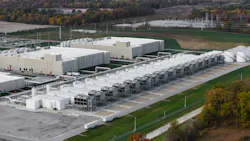
Data center power demand continues to outpace the grid’s ability to deliver and as a result, an increasing number of developers are integrating on-site power into their long-term energy strategies, according to a new report.
Bloom Energy’s 2026 Data Center Power Report found that power availability is now the key planning consideration for developers as they look to expand their operations. Bloom Energy is a provider of modular, fuel cell-based generation.
Developers once thought of on-site solutions as bridge power — generation resources that provide power until utility infrastructure is built. Once connected to the grid, those onsite resources would act as an islandable microgrid, providing resilience in case of grid outages.
However, the survey found that attitude is rapidly changing as utility “time to power” deadlines grow longer, especially in key data center markets like Northern Virginia, Atlanta and the Bay Area.
For an industry that simply can’t wait years for the grid to catch up with demand, on-site or co-located power generation is increasingly seen as a permanent solution.
The survey revealed that a third (33%) of data centers are expected to be fully powered by on-site resources by 2030 — up from just 1% in April of 2024.
On-site power may overcome community objections
It is well known that data centers —especially those running artificial intelligence applications — are power-hungry installations.
The Bloom Energy Data Center Power Report revealed that nearly one in five data center campuses is expected to exceed gigawatt (GW) scale by 2030. One in three are expected to achieve GW status by 2035.
To put that into perspective, a single gigawatt data center requires as much power as a medium-sized city.
Across the country, there is growing concern around who will foot the bill for the grid infrastructure necessary to power these large loads. Neighbors are also uneasy about the environmental impact of their potential new neighbors.
Communities in Maryland, Oklahoma, Georgia and Ohio, among others, are exploring or passing laws that limit or slow data center development until energy, water use and other environmental concerns can be addressed.
Just this week, U.S. Rep. Alexandria Ocasio-Cortez, D-N.Y., and independent U.S. Sen. Bernie Sanders of Vermont introduced a bill that would pause new data center development nationwide until safeguards are in place. While the bill is unlikely to gain traction in either the House or the Senate, it echoes the concerns seen at the local level.
Shifting from grid power to on-site prime power could mitigate concerns over rate increases (especially if the data center is footing the bill), but an on-site or co-located GW-plus power plant could still inspire intense “not-in-my-backyard” (NIMBY) sentiments, depending on the technology deployed.
Of the 75% of developers that reported they are actively evaluating onsite power solutions, nearly half said they were seriously considering fuel cells. Typically fueled by natural gas in a combustion free process, the technology has a minimal emissions profile.
Other technologies under consideration include reciprocating engines (39%) and mobile turbines (33%), both of which have higher local emissions.
Microgrids and data centers
Data center microgrids were a common theme at CERAWeek 2026, as reported by Rod Walton, managing editor of Microgrid Knowledge. From hyperscalers to big-name tech companies like Google, data centers are investing billions in developing their own energy systems to circumvent grid interconnection queues.
Pure Data Centers Group recently unveiled a 10 MW onsite microgrid to power its facility in Dublin, Ireland. While the combined heat and power and battery energy storage microgrid is currently islanded (off-grid), it will eventually be connected to the grid.
A Grid in Peril and Resiliency Lives at the Edge
New Paradigm for Microgrids
Free E-Book from Microgrid Knowledge
About the Author
 Kathy Hitchens
Kathy Hitchens
Special Projects Editor
I am a writer and special projects editor for Microgrid Knowledge. I have over 30 years of experience covering the renewable energy, electric vehicle, utility, technology, entertainment, education, and financial sectors. I have a BFA in Media Arts from the University of Arizona and a MBA from the University of Denver.