Hyperscaler Oracle Raises Bloom Energy Fuel Cell Commitment to Nearly 3 GW
Key Highlights
- - Oracle plans to spend about $50 billion this year on AI and computing infrastructure, with significant investments over the next decade.
- - Oracle is exploring on-site power solutions, including fuel cells and small modular nuclear reactors, to meet the growing energy demands of AI data centers.
- - Strategic energy agreements aim to reduce emissions and ensure reliable power supply amid increasing grid constraints and infrastructure expansion.

Database software and cloud infrastructure giant Oracle is planning to spend about $50 billion this year alone on development of artificial intelligence and computing facilities, as well as multiple times that amount over the next decade to stay relevant in the AI race.
Oracle also intends to invest additional billions in energy supply commitments to power these supercomputing factories. The company has cut on-site energy deals with VoltaGrid and others for multiple gigawatts of capacity to feed electricity-hungry AI training models.
The latest Oracle power agreement is with fuel-cell technology firm Bloom Energy. Under the deal Oracle will procure nearly 3 GW of Bloom’s fuel-cell capacity. The initial phase of 1.2 GWa already has been contracted in the U.S.
The companies are expanding on an earlier power supply agreement and will broaden the focus on distributed and on-site generation to build capacity faster. Last year, Bloom Energy delivered a fully operational fuel cell system to Oracle in just 55 days—more than a month ahead of the anticipated 90‑day deployment schedule.
“We are delighted to expand our relationship with Oracle following an initial successful deployment,” said Aman Joshi, Chief Commercial Officer at Bloom Energy, in a statement. “Together, we are defining a shared vision for the future of energy and AI infrastructure, with Bloom advancing its position as the standard for on-site power.”
Fuel cells use an electrochemical process to convert fuels into electricity without direct emissions. They can run on natural gas and hydrogen.
Hyperscalers shifting into active energy consumers
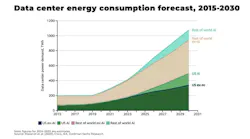
Oracle, like many of the hyperscalers engaged in the digital infrastructure buildout, are shifting from passive to active energy procurement and seeking multiple power generation resources to meet its current and future AI energy demand.
“By rapidly deploying Bloom’s reliable, efficient fuel cell energy, we are quickly meeting the demands of our customers across the United States,” said Mahesh Thiagarajan, executive vice president, Oracle Cloud Infrastructure, in a statement. “Together, Bloom and Oracle Cloud Infrastructure are building the power foundation and AI infrastructure to accelerate American AI leadership.”
Last year, the company signed massive power supply agreements with VoltaGrid, which in turn procured natural gas engine capacity from INNIO Group.
Resilient Energy Storage for C&I Microgrids
New from EOS
Two years ago, Oracle founder and Chairman Larry Ellison told investors and media that it planned to build a gigawatt-scale data center that will be powered by three nearby small modular nuclear reactors (SMRs). During the quarterly earnings call, Ellison indicated the nuclear-powered data center was under design but didn’t give a concrete timeline.
Industry analysts say that coming data center construction could require close to 125 GW of new electricity by early 2030. Some of these companies increasingly are embracing “behind-the-meter” and on-site power location in meeting “speed to power” goals and avoid long utility interconnection project queues.
Utilities such as Dominion and AEP are scrambling to figure out ways of meeting that mission critical load expansion. Big tech firms such as Oracle, Microsoft and Tesla also signed on to the Trump Administration’s Ratepayer Projection Pledge, committing to directly financing some project development and avoid higher rates for residential customers.
Grid system operators such as PJM Interconnection and Midwest Independent System Operator have warned that grid constraints will grow even as digital infrastructure buildout expands. The amount of demand coming is outpacing the power generation capacity growth, those grid leaders say.
Data Center Microgrids and Speed to Power
Key Content Elements at the Microgrid Knowledge Conference
MGK 2026 Happening May 4-6 IN Orlando: Join us
About the Author
 Rod Walton, Microgrid Knowledge Managing Editor
Rod Walton, Microgrid Knowledge Managing Editor
Managing Editor
For Microgrid Knowledge editorial inquiries, please contact Managing Editor Rod Walton at [email protected].
I’ve spent the last 18 years covering the energy industry as a newspaper and trade journalist. I was an energy writer and business editor at the Tulsa World before moving to business-to-business media at PennWell Publishing, which later became Clarion Events, where I covered the electric power industry. I joined Endeavor Business Media in November 2021 to help launch EnergyTech, one of the company’s newest media brands. I joined Microgrid Knowledge in July 2023.
I earned my Bachelors degree in journalism from the University of Oklahoma. My career stops include the Moore American, Bartlesville Examiner-Enterprise, Wagoner Tribune and Tulsa World, all in Oklahoma . I have been married to Laura for the past 36-plus years and we have four children and one adorable granddaughter. We want the energy transition to make their lives better in the future.
Microgrid Knowledge and EnergyTech are focused on the mission critical and large-scale energy users and their sustainability and resiliency goals. These include the commercial and industrial sectors, as well as the military, universities, data centers and microgrids. The C&I sectors together account for close to 30 percent of greenhouse gas emissions in the U.S.
Many large-scale energy users such as Fortune 500 companies, and mission-critical users such as military bases, universities, healthcare facilities, public safety and data centers, shifting their energy priorities to reach net-zero carbon goals within the coming decades. These include plans for renewable energy power purchase agreements, but also on-site resiliency projects such as microgrids, combined heat and power, rooftop solar, energy storage, digitalization and building efficiency upgrades.