Data Center Executives Say Islanding Important, Expect On-Site Generation to Cut Grid Reliance
Key Highlights
- Over 70% of data center leaders expect to significantly reduce grid reliance through onsite power within five years.
- By 2030, more than 35 GW of data center power is projected to be self-generated globally, emphasizing a shift towards renewable and off-grid solutions.
- Community opposition and utility interconnection delays are prompting data centers to prioritize onsite power options to accelerate deployment and ensure resilience.

Data center developers are moving toward onsite energy and see microgrids providing resilience as critical, according to two recent reports.
A report from Capgemini Research found data center executives see a critical role for microgrids in providing reliability, while a report from Bloom Energy predicted one-third of U.S. data centers will operate with 100% on-site power by 2030.
AI Meets the Grid: Shaping the Data Center Power Play, from the Capgemini Research Institute, found that more than seven in 10 data center leaders expect to significantly reduce their reliance on the grid through on-site power.
According to Bloom Energy’s Mid-Year Pulse Report, 61% of data center developers would choose onsite power over relocating projects if the grid isn’t available. It also pointed to data center operators’ interest in deploying direct-current (DC) architecture—including DC microgrids like those supplied by Bloom Energy.
Globally, 35 GW of Data-Center Self-Generated Power by 2030
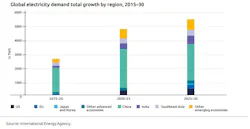
The Capgemini report predicted that by 2030, more than 35 GW of data center power will be self-generated globally. The report is based on a survey of energy and data-center executives in 21 countries plus insights from industry leaders.
Capgemini also found that 86% of data-center executives globally and 88% in North America see the ability to island from the grid during power outages as an important competitive advantage. More than seven in 10 said on-site or next-to-site power generation will cut reliance on the grid within the next five years.
For example, China-based Tencent’s Tianjin data center has planned a 10.5-MW microgrid comprising solar power, battery storage and AI energy management, the report said. The goal is to reduce grid dependence and deploy green energy.
Twenty-nine percent of data center operators surveyed by Capgemini have deployed behind-the-meter power, according to the report. An additional 39% of those surveyed plan to consider on-site power in the next 1 to 2 years.
The Capgemini report quoted Cameron McInnes, global head of engineering at Barclays: “As part of the strategy to modernize our freehold data centers with a strong focus on decarbonization and efficiency, we’re maximizing on-site solar across three data centers, two in the U.S. and one in the U.K., with funding progressing for approval.”
Ditching oil and gas, partnering with renewables developers
Barclays is transitioning away from gas and fossil fuels and focusing on renewables and electrification. Most data center operators plan to form partnerships with renewables developers or energy service organizations, the report said.
The Capgemini report also focused on the risks of deploying too much onsite power.
When data centers switch between grid supply, demand response, and virtual power plant participation, along with islanded operations, they can undermine load predictability, creating challenges for the grid and microgrids. The Capgemini report described how 60 data centers in Northern Virginia’s Data Center Alley simultaneously pulled 1,500 MW off the grid in the summer of 2025 and switched to onsite generators in response to safety triggers. This created excess power on the grid and prompted PJM and Dominion Energy to curtail generation to prevent outages.
“The frequency of such ‘near‑miss’ events has increased sharply as the penetration of large, partially self‑supplied data‑center loads has grown. If poorly coordinated, onsite generation can fragment demand, erode electricity-organization revenues, and shift costs onto other customers,” the Capgemini report said.
Over the last decade, electricity demand in markets grew at a modest pace, driven by efficiency gains and shifting energy use. That is now changing. Data centers, spurred by AI training, are becoming system-defining customers, the report said.
Advice for electricity providers
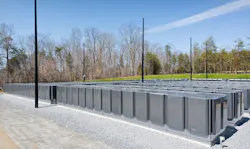
Electricity providers should focus on demand shaping along with faster, more flexible delivery using AI-powered operations as data-center energy demands rise, the report said.
The Bloom report, based on interviews with 156 data center operators and related industry members, said that community opposition and difficulty obtaining utility power are two major roadblocks to developing data centers.
Twelve percent of Bloom’s respondents said they could reduce the scale of deployment if bottlenecks are a challenge, 15% said they could delay deployment and 12% said they could relocate to a site with grid power, said Natalie Sunderland, chief marketing officer at Bloom Energy.
With data center electricity demand predicted to more than double by 2030, one-third of US data centers are expected to operate 100% on on-site power by 2030, according to Bloom’s report.
A Wood Mackenzie report warned about the dangers of the bring-your-own power model in a recent report, saying it poses technical and regulatory risks that could undermine grid stability and hurt data centers attempting to deploy the model.
How onsite power might avoid community opposition to data centers
The respondents favored onsite power because it allows them to skip long interconnection queues. In addition, being off-grid doesn't affect other ratepayers’ rates. Numerous communities are opposing data center development near them, and saying they don’t want to pay for data center energy.
During the first quarter of 2026, grassroots opposition blocked and delayed the largest single concentration of data center development, according to Datacenterwatch.
“Dealing with the community scrutiny is a new growing barrier,” Sunderland said.
For example, in response to community opposition, Oregon passed the Power Act (HB 3546), which requires data centers to pay for their share of energy costs. It also requires utilities to ensure they can meet the state’s renewable portfolio standard before bringing new data centers online.
Data center developers are looking to find power as early as possible, said Carl Cottuli, senior vice president, global engineering at Bloom Energy.
Many have established reference designs that include options for onsite power to give them a path for that option. That’s an effort to speed up the process of getting the data centers up and running, he said.
Bloom says sales of its off-grid microgrids to data centers has grown
Data center developers are increasingly concerned about resilience, prompting more to choose off-grid microgrids. Bloom has seen an increase in sales of its fuel-cell microgrids as a result of that trend, he said.
In April, Bloom Energy announced an expanded partnership with Oracle under which Oracle intends to obtain up to 2.8 GW of Bloom’s fuel cell systems.
Bloom Energy’s prices are equal to or better than grid prices nationally, he said.
“In certain states, we are much more cost-effective than the grid. And overall, the cost of grid power is trending up,” Cotulli said. “Relative to competitors–gas generators– I'd say we are at parity.”
Fifty-seven percent of Bloom’s respondents said they expect direct current (DC) architecture–as opposed to alternating current (AC) architecture —to dominate in data centers, the Bloom report found.
Because chips run on DC power, data centers naturally accept DC as a source to power large-frame compute equipment.
“That's why the market is positioning itself around DC and saying, ‘Why am I going through all this conversion nonsense when I'd rather just get it as DC, consume it as DC, and then put out the gigabytes of data,’” he said.
The move to onsite power is relatively recent, Sunderland said. A year or two ago, data centers expected the grid to eventually be available and were looking for power until they could interconnect. But that has changed, and operators are now seeking onsite power, especially amid community backlash.
“Given the community scrutiny, there is more importance placed on making sure that when a data center comes in, it’s not affecting the grid’s resilience and cost to ratepayers,” Sunderland said. “We see onsite power as being a very permanent solution.”
About the Author
 Lisa Cohn
Lisa Cohn
Contributing Editor
I focus on the West Coast and Midwest. Email me at [email protected]
I’ve been writing about energy for more than 20 years, and my stories have appeared in EnergyBiz, SNL Financial, Mother Earth News, Natural Home Magazine, Horizon Air Magazine, Oregon Business, Open Spaces, the Portland Tribune, The Oregonian, Renewable Energy World, Windpower Monthly and other publications. I’m also a former stringer for the Platts/McGraw-Hill energy publications. I began my career covering energy and environment for The Cape Cod Times, where Elisa Wood also was a reporter. I’ve received numerous writing awards from national, regional and local organizations, including Pacific Northwest Writers Association, Willamette Writers, Associated Oregon Industries, and the Voice of Youth Advocates. I first became interested in energy as a student at Wesleyan University, Middletown, Connecticut, where I helped design and build a solar house.
Twitter: @LisaECohn
Linkedin: LisaEllenCohn
Facebook: Energy Efficiency Markets