President Trump “Can’t Put the Genie Back in the Bottle” on EVs, Microgrids, Storage: CEC Director
When President Trump rolled back federal funding for electric vehicles (EV) and solar–both of which are part of microgrids–he only slowed the energy transition.
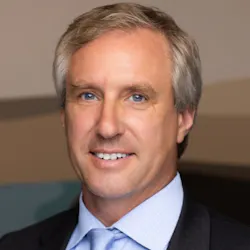
“But he can’t put the genie back in the bottle,” said California Energy Commission (CEC) chair David Hochschild during an interview with Microgrid Knowledge.
“States like California and many others still have a lot of power to move things forward. Certainly, we're seeing that on the grid in California,” said Hochschild, who is also the co-founder of the Electric Innovation Initiative, which gives awards and support to innovative electrification technologies.
Despite Trump’s policies, clean energy is being adopted in California, he said. Two-thirds of California's electricity is clean, drawn from solar, wind and geothermal sources.
In addition, during Trump’s first year, 91% of grid capacity additions in the U.S. came from clean energy sources such as solar and wind. And there’s continued momentum for renewable energy and electric vehicles (EV) around the world, he said. In September 2025, 60% of China’s vehicle sales were EVs.
Electric innovation awards application deadline is June 3
Hochschild expects that such clean energy advances will continue in California and the U.S., and hopes to bolster them with the Electric Innovation Initiative awards, which identify innovative leaders and models that can be scaled.
The initiative, now in its second year, connects award winners with partners who can help them accelerate deployment of their technology. Project developers and companies can apply for the initiative’s 2026 awards by June 3.
Last year’s winners include Electrify America’s battery storage systems, the City of Atlanta’s EV readiness ordinance, Zum’s vehicle-to-grid school bus program and Gradient’s window heat pump technology.
Vehicle-to-grid school buses serve as mobile microgrids
Under Zum’s vehicle-to-grid school bus program in Oakland, Calif., Zum and Oakland Unified School District deployed 74 bidirectional buses– serving as mobile microgrids–that send energy from the bus batteries to Pacific Gas & Electric’s grid. The buses provide 2.1 GWh/year to the grid, which helps out the utility and reduces diesel pollution in a community that has poor air quality.
Under the program, after transporting students, the school district plugs in the buses and feeds power to the grid–supporting grid reliability–and gets paid for it, said Hochschild.
The buses are charged with grid power at night and run a route in the morning and afternoon, leaving about 50-140 kWh in the electric bus battery.
“They're back and plugged in at 4 p.m, and that’s when the grid needs power, particularly in July, August and September,” Hochschild said.
At night, when there’s extra energy on the grid, the buses are charged.
A quarter of California car sales are EVs
California has the highest number of EVs on the road, adding 1,200 a day, about 25% of vehicle sales, Hochschild said. That’s not the only electrification gain. About 80% of new buildings are all-electric to meet the requirements of Title 24 of the CEC’s building code.
Microgrids play an important role in California, particularly in rural areas that experience outages, he said. This is often true for tribes.
“I think the best use case for microgrids is on these concentrated and particularly remote sites that lose power frequently. That's where they really make the most economic sense,” he said.
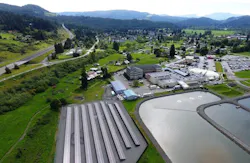
The first microgrid that CEC helped fund was the Blue Lake Rancheria microgrid, which helped save lives during public safety power shutoffs in 2019. The tribe opened its doors to the broader community, allowing people to charge their medical devices.
“Blue Lake Rancheria has been a wild success. It has kept the lights on. That really is the template,” Hochschild said. The CEC has spent $165 million to support tribal energy sovereignty by deploying solar microgrids and EV charging.
Funding on hold for tribal microgrid project
One innovative tribal project is the Tribal Energy Resilience and Sovereignty project (TERAS), which aims to create a resilience network of solar microgrids for four tribes in an outage-prone region.
The project was funded with $87.6 million from the federal Department of Energy, but the Trump administration put funding on hold.
“We're hopeful some of that funding can get unlocked,” Hochschild said.
Existing solar systems–along with solar microgrids and EVs–can help insulate California from the effects of high oil prices, he noted.
How solar helps insulate residents and businesses from high oil prices
“The cost of solar is in building the infrastructure. But once you install that
solar, sunshine is free. So it does protect us from the vulnerability we face
to these global fossil fuel markets and the volatility that we've seen.”
However, for new solar projects, high gasoline prices boost the cost of transporting solar panels.
Because of high oil prices, gasoline prices in the state are now as high as $6/gallon, making EVs more attractive.
“You can make a case that President Trump's war on Iran is really undermining his war on electric vehicles and his war on renewables,” he said.
Trump has tried to undermine wind and solar projects, but federal judges recently blocked those efforts. And in five cases, federal judges have halted the Trump administration’s efforts to kill offshore wind projects.
Citizens should vote through their purchases
Citizens can vote with their purchases, choosing EVs, heat pumps and other sources of clean energy, he said.
“You have a chance to vote about how you live and which energy sources you want to elevate. This is a nice feature of decarbonization and climate solutions,” he said.
Knight-Swift Leading Trucking Transformation
New Microgrid White Paper from Schneider Electric
About the Author
 Lisa Cohn
Lisa Cohn
Contributing Editor
I focus on the West Coast and Midwest. Email me at [email protected]
I’ve been writing about energy for more than 20 years, and my stories have appeared in EnergyBiz, SNL Financial, Mother Earth News, Natural Home Magazine, Horizon Air Magazine, Oregon Business, Open Spaces, the Portland Tribune, The Oregonian, Renewable Energy World, Windpower Monthly and other publications. I’m also a former stringer for the Platts/McGraw-Hill energy publications. I began my career covering energy and environment for The Cape Cod Times, where Elisa Wood also was a reporter. I’ve received numerous writing awards from national, regional and local organizations, including Pacific Northwest Writers Association, Willamette Writers, Associated Oregon Industries, and the Voice of Youth Advocates. I first became interested in energy as a student at Wesleyan University, Middletown, Connecticut, where I helped design and build a solar house.
Twitter: @LisaECohn
Linkedin: LisaEllenCohn
Facebook: Energy Efficiency Markets