Solar, Storage and Gas Microgrid Turns Spokane’s MLK Community Center into a Resilience Hub
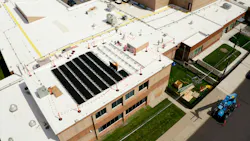
A new solar and energy storage microgrid has transformed the Dr. Martin Luther King Jr. Family Outreach Center in Spokane, Washington’s historic East Central Neighborhood into a resilience hub, ensuring the delivery of essential services to the surrounding community during extended power outages.
Resilience hubs serve as gathering places and respites during unexpected power outages.
Libraries, senior centers, schools, churches, and nonprofits across the country are increasingly investing in solar and energy storage microgrid systems to better serve their communities during extended outages.
By doing so, these trusted, accessible spaces can become distribution points for food and supplies and safe locations to charge devices, power medical equipment, or store temperature-sensitive medication.
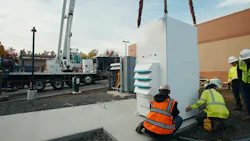
The MLK Center microgrid includes a rooftop solar array, battery storage and a natural gas backup generator for outages that last more than a few hours.
It also features two EV chargers to power electric police cars stationed at the Center.
“We’re here for families every day, and during emergencies, people rely on us even more,” Freda Gandy, executive director of the MLK Center, said in a statement. “This energy system helps us continue that work and keep our doors open for the East Central neighborhood.”
In addition to delivering resilience, the power generated by the microgrid will help the Center lower its electricity bills.
Utility and state grants paid for the microgrid
The MLK Center has been a fixture in the East Central neighborhood for more than 40 years. What started as a youth center providing support to economically disadvantaged youth has evolved into a community-based services organization that assists low-income families across Spokane County.
It runs a food pantry and provides childcare, activities for seniors and educational programs for K-12 students.
The Center partnered with local utility Avista to develop the microgrid, which the organizations say is the first in the region.
The project was funded by grants from Avista’s Named Communities Investment Fund (NCIF) and the Washington State Department of Commerce (DOC). The NCIF, created to help support energy projects that benefit communities facing extreme weather or social inequities, is the only utility program of its kind in the state, according to Avista.
“We believe the best energy solutions come from working hand in hand with the community. When we listen first and build together, we can create systems that support people today and into the future,” said Heather Rosentrater, Avista CEO and president.
Resilience hubs are trending across communities
With extreme weather events becoming more frequent—and more damaging to grid infrastructure—resilience hubs are coming online across the country.
The Washington State Department of Commerce has provided funding for a number of resilience hubs in recent years, including one at the Methow Valley United Methodist Church.
In Georgia, New Bethel African Methodist Episcopal (AME) Church leveraged grant funding from Georgia BRIGHT, a nonprofit Community Development Financial Institution, and several other community organizations for its solar and energy storage microgrid.
Together Louisiana, a grassroots organization of some 250 religious and civic groups, is building Community Lighthouses—its term for resilience hubs—to aid vulnerable communities in and around New Orleans with flood recovery. They have 10 microgrids up and running and aim to build another 85.
Google also funded two resilience hubs in rural southwest Virginia earlier this year.
About the Author
 Kathy Hitchens
Kathy Hitchens
Special Projects Editor
I am a writer and special projects editor for Microgrid Knowledge. I have over 30 years of experience covering the renewable energy, electric vehicle, utility, technology, entertainment, education, and financial sectors. I have a BFA in Media Arts from the University of Arizona and a MBA from the University of Denver.