California’s Largest Hotel and Convention Center Plans Combined Heat and Power Microgrid

Unison Energy, which has deployed microgrids at Gaylord Hotels properties in Maryland and Colorado, is now moving forward with a third microgrid at a Gaylord property in Chula Vista, Calif.--California’s largest hotel and convention center.
The company, which offers energy-as-a-service agreements for critical infrastructure, signed an agreement with RIDA Chula Vista, the developer of the Gaylord Pacific Resort and Convention Center, to provide a 3-MW combined heat and power (CHP), grid-connected microgrid that’s expected to power most of the center’s electrical needs and its heat and hot water, said Mariko Meier, CEO at Unison Energy. That includes 1,600 guest rooms and suites, about 10 restaurants, numerous pools and waterslides and a spa.
The microgrid will match up to 94% of the center’s electric load, saving the company $1.09 million in the first year–18.5%--and $35.9 million over the life of the microgrid, said Nick Erdogan, head of marketing at Unison Energy.
Microgrid located at site of bayfront revitalization project
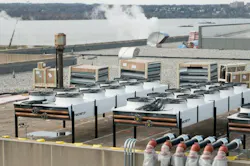
The resort and convention center are part of the Chula Vista Bayfront revitalization project, under which the Port of San Diego and the city of Chula Vista are creating new public parks and recreational opportunities, improving the natural habitat and providing new dining and shopping options. The project is located at the site of the South Bay Power Plant, which San Diego Gas & Electric shut down in 2010.
A major goal of the microgrid project is to provide cost-effective power, Meier said.
That’s possible in part because of the efficiencies that can be gained through the CHP system, using waste heat to create hot water for heating and hot water. The microgrid’s ability to island from the grid to provide resiliency is also important, Meier said. The microgrid consists of natural-gas-fired engines that can operate during an outage.
CHP plants are seen as unsung microgrid heroes. With the ability to produce a continuous, controllable baseload source of electric and thermal energy, CHP remains a uniquely practical resource, especially for mission-critical facilities operating microgrids.
Princeton University’s CHP microgrid after Superstorm Sandy
For example, in October 2012, Princeton University made headlines worldwide when over 8 million electric customers lost power during Superstorm Sandy and the university’s microgrid–developed internally–kept its critical systems running. This allowed the New Jersey-based Ivy League campus to serve as an electric refuge for faculty, students, staff members, first responders and local community members.
At the time, the campus was powered by an on-site 15-MW CHP plant that produced electricity and thermal energy for heating and cooling. The microgrid also included chilled water, thermal storage, a 5.4-MW solar photovoltaic farm and an advanced control system.
To provide both resilience and energy cost savings, CHP microgrids from Unison are all deployed under energy-as-a-service agreements, under which Unison builds, owns and maintains the microgrid, and the client pays monthly, generally less than what it would pay for utility power, Meier said.
In some cases, the client pays extra for extra resilience, she noted. When clients pay extra, it’s for more engines than usual to provide additional redundancy. A food storage company might do this because losing refrigerated food is costly.
Resilience has played an important role in Unision’s projects. For example, in December 2022, when power went out in portions of Long Island because of the bad weather sweeping the U.S., utility Public Service Electric & Gas PSEG Long Island notified a ShopRite grocery store that a line was down that served the feed to the store. Thanks to a Unison CHP microgrid, the lights were on and the refrigerators were powered at the Lake Ronkonkoma, New York, store, even though nearby buildings went dark.
Worries about rising energy prices dog CFOs
More and more of Unison Energy’s clients are concerned about both resiliency and high energy costs predicted for the next five to 10 years.
“Folks are really worried about PJM being at capacity, about data centers coming online. And they're seeing for the last, you know, five to 10 years that the grid has not been able to keep up with the increased demand,” Meier said.
More company chief financial officers (CFOs) are reaching out to site managers and energy managers with questions about how to address increasing energy costs.
“What we have seen as a huge change in the last two to five years is that energy is becoming a key component of how CFOs at these companies are thinking about managing their costs and managing their risk,” Meier said.
Unison’s cost to build the microgrid was lowered by the Biden-era Inflation Reduction Act's safe harbor provisions, including a 40% investment tax credit (ITC) for the project. That includes the base 30% ITC plus an extra 10% because the convention center and resort are located in an “energy community” at the site of the closed power plant. The goal of this kind of energy community is to replace employment lost when the power plant shut down.
CHP microgrid equals 50% of Gaylord Hotel power
When the microgrid in California is operating, Unison Energy will power three of Gaylord Hotels' facilities, providing about 50% of its power, she said.
The other microgrids are serving the National Resort and Convention Center in Prince George’s County, Md., and the Gaylord Rockies Resort and Convention Center in Denver.
One of Unison’s challenges in deploying these microgrids: It takes a long time to get contracts signed because large organizations are trying to optimize several factors, Meier said.
“We want to make sure that we're providing the right technical solution that is going to continue to solve their problems for 20 years. And the rules are changing every day. To build an asset that is going to be useful for 20 years requires us to be very aligned with the customer and really understand their needs,” she said.
About the Author
 Lisa Cohn
Lisa Cohn
Contributing Editor
I focus on the West Coast and Midwest. Email me at [email protected]
I’ve been writing about energy for more than 20 years, and my stories have appeared in EnergyBiz, SNL Financial, Mother Earth News, Natural Home Magazine, Horizon Air Magazine, Oregon Business, Open Spaces, the Portland Tribune, The Oregonian, Renewable Energy World, Windpower Monthly and other publications. I’m also a former stringer for the Platts/McGraw-Hill energy publications. I began my career covering energy and environment for The Cape Cod Times, where Elisa Wood also was a reporter. I’ve received numerous writing awards from national, regional and local organizations, including Pacific Northwest Writers Association, Willamette Writers, Associated Oregon Industries, and the Voice of Youth Advocates. I first became interested in energy as a student at Wesleyan University, Middletown, Connecticut, where I helped design and build a solar house.
Twitter: @LisaECohn
Linkedin: LisaEllenCohn
Facebook: Energy Efficiency Markets