Ohio AI Data Developer Taps Veolia to Handle 350-MW Microgrid O&M
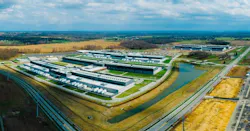
Environmental and energy efficiency technology firm Veolia has been selected to operate and maintain a 350-MW multi-resource microgrid planned to power an artificial intelligence (AI) data center campus in Ohio.
French-based Veolia is contracted to utilize its Data Center Resource 360 operational solution that manages energy, water and waste impacts in digital infrastructure facilities such as this project near New Albany, Ohio. Veolia has a history of operating multi-faceted energy infrastructure, commissioning data centers and making industrial processing centers more efficient.
“Our work on this project shows how Veolia can help developers accelerate speed-to-power while maintaining the reliability required for mission-critical AI operations, all while protecting the community,” said Karin Hamel, CEO of Veolia Energy, North America and Chief Growth Officer for Veolia in North America, in a statement. “As developers deploy microgrids and other advanced energy systems to meet the growing demand for AI infrastructure, they need trusted partners with the expertise to operate these assets safely, reliably and at scale.”
Veolia did not name the data center developer or tenants in its press release about the microgrid contract. Facebook, Instagram and AI-technology owner Meta is planning to build its Prometheus computing complex in New Albany with some phase of construction expected to be completed as early as 2027, according to previous news reports.
The rush to build out power capacity meeting rising load from AI and data computing is leading many developers to seek out “behind the meter” or off-grid solutions such as microgrids. They can be connected to the utility grid but also possess on-site energy resources which can be islanded and keep the campus energized even during an outage.
The 350-MW microgrid will include multiple resources which can handle 100% of the data center load, according to Veolia. This will include gas engines and linear generators, as well as 430 MWh in battery energy storage capacity to be available instantly and deal with the transient load challenges of AI factories.
The microgrid will be integrated with medium-voltage electrical infrastructure into a coordinated platform. The project is not completed, so Veolia is being brought in to support startup readiness, oversee operations integration, commissioning and long-term operations under a performance-based model.
Veolia’s microgrid experience includes a collaboration with AECOM on an $8.2 million microgrid to back up and power a wastewater treatment plant in Rialto, California. The company also designed and/or oversaw microgrids and CHP projects at commercial real estate and educational sites in New York.
Explore Market Forces Driving the Next Era of Microgrids & DERs
Check out the new and free E-Book from Microgrid Knowledge
About the Author
 Rod Walton, Microgrid Knowledge Managing Editor
Rod Walton, Microgrid Knowledge Managing Editor
Managing Editor
For Microgrid Knowledge editorial inquiries, please contact Managing Editor Rod Walton at [email protected].
I’ve spent the last 18 years covering the energy industry as a newspaper and trade journalist. I was an energy writer and business editor at the Tulsa World before moving to business-to-business media at PennWell Publishing, which later became Clarion Events, where I covered the electric power industry. I joined Endeavor Business Media in November 2021 to help launch EnergyTech, one of the company’s newest media brands. I joined Microgrid Knowledge in July 2023.
I earned my Bachelors degree in journalism from the University of Oklahoma. My career stops include the Moore American, Bartlesville Examiner-Enterprise, Wagoner Tribune and Tulsa World, all in Oklahoma . I have been married to Laura for the past 36-plus years and we have four children and one adorable granddaughter. We want the energy transition to make their lives better in the future.
Microgrid Knowledge and EnergyTech are focused on the mission critical and large-scale energy users and their sustainability and resiliency goals. These include the commercial and industrial sectors, as well as the military, universities, data centers and microgrids. The C&I sectors together account for close to 30 percent of greenhouse gas emissions in the U.S.
Many large-scale energy users such as Fortune 500 companies, and mission-critical users such as military bases, universities, healthcare facilities, public safety and data centers, shifting their energy priorities to reach net-zero carbon goals within the coming decades. These include plans for renewable energy power purchase agreements, but also on-site resiliency projects such as microgrids, combined heat and power, rooftop solar, energy storage, digitalization and building efficiency upgrades.