SpaceXAI's Power Play: Navigating AI Ambitions and Environmental Challenges

The world’s richest man is all in on artificial intelligence and has embraced natural gas as a key fuel to power AI factories in his company. For all his enthusiasm and customary banter, however, Elon Musk isn’t talking so much when it comes to the virtues of his AI projects and gas-fired power generation plans in the U.S.
The New York City Council is starting hearings next week on the social, environmental and economic impacts of AI. Leaders with companies such as OpenAI, Google, Anthropic and Meta are expected to give testimony, as is Musk’s SpaceXAI, even though it had to be subpoenaed after ignoring repeated requests to appear.
Meanwhile, the SpaceXAI supercomputing factory under construction in eastern Mississippi is facing significant national, state and local opposition after it was learned this summer that the site was using 69 unpermitted natural gas turbines for dedicated on-site power. And it plans to use at least some of those gas turbines until the summer of 2027.
“We have entered into an agreed order with the Mississippi Department of Environmental Quality establishing a fixed removal timeline for all 69 of the temporary, mobile turbines that currently power our facility in Southaven, Mississippi,” SpaceXAI’s press release several months ago. “We are rapidly removing these mobile turbines as we bring online permanent power from a 1.2 GW power plant we are constructing under our Clean Air Act permit. We will begin removing temporary turbines from the site as early as August 2026. All temporary turbines will be removed by July 2027. Today's agreed order codifies our commitment to achieve this timeline.”
Musk's Colossal Plans for AI Future
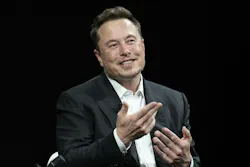
The power plant is being built to provide dedicated power to the company’s Colossus data centers. SpaceXAI has projected that the Colossus digital infrastructure would initially need about 1.4 GW of computing and power generation capacity, eventually expanding to as much as 20 GW.
Musk has called it the world’s “largest supercomputer” and using hundreds of thousands of NVIDIA high-performance GB200 and GB300 chips.
“If we get lucky, yet another 220k GB300 by late December,” he wrote in a post on social media site X, which he also owns. Each NVIDIA GB300 NVL72 processor consumes about 1,400 watts (1.4 kW) per chip.
Neither Musk nor his competitors are shy in advancing their ambitions for AI in the future, although he has expressed reservations about its impact on mankind if not properly regulated. He also has spoken of natural gas as a temporary bridge fuel to power AI in the near term.
However, the mogul multi-billionaire has not spoken publicly about the unpermitted gas turbines under operation in Mississippi nor his $1 billion acquisition of natural gas mobile power generation provider APR Energy.
The APR deal came to light through spare Federal Trade Commission documentation in July. The FTC website included only a few sentences about the acquisition, and the APR Energy link given then led only to a 403-error message, and it also does the same now.
Musk has not spoken publicly about either the APR investment or to the Mississippi Colossus power generation turbines. The Mississippi Department of Environmental Quality was criticized by citizen groups over its passive handling of the deal, and the NAACP and other groups have sued SpaceXAI for the alleged emissions impact on nearby black-majority communities.
The Trump Administration’s U.S. Department of Justice has tried to intervene, asking a federal judge to dismiss the NAACP case which alleges violations of Federal Clean Air Act permitting rules. Musk was a supporter and contributor to Donald Trump’s second successful bid for the presidency in 2024 and temporarily headed up the DOGE effort to slash government spending.
“Ultimate responsibility for enforcing federal law belongs to the Executive Branch, not private interest groups,” statements by assistant U.S. attorneys general read in the Justice filing this summer. “The Department of Justice will not sit idly by while private organizations use environmental laws to undermine our national security.”
“’Move fast and break things’ is the unofficial motto of the tech industry,” reads the NAACP’s introduction to its lawsuit. “As the motto promises, artificial intelligence company Defendant X.AI Corp. (“xAI”) and its subsidiaries broke Clean Air Act requirements that protect public health when rushing to build gas power plants for their “Colossus” data centers in the greater Memphis area.”
Colossus I was the original AI-enabled digital infrastructure built by Musk’s company in the Memphis region. SpaceXAI is working toward successive Colossus sites in Tennessee and Mississippi.
“SpaceXAI is building the world's largest integrated supercomputer at the Tennessee-Mississippi state line. We build our facilities rapidly while upholding the highest standards of operational responsibility, environmental stewardship, and community partnership,” the company wrote in its July release about the eventual removal of the unpermitted gas turbines. “SpaceXAI is committed to powering its supercomputers in ways that both reduce costs of energy for the American people and minimize the impact on surrounding communities.”
Time to Power Up Those Hot Topics
Microgrid Knowledge Conference Call for Sessions Still Open
Submit Your Content Ideas
About the Author
 Rod Walton, Microgrid Knowledge Managing Editor
Rod Walton, Microgrid Knowledge Managing Editor
Managing Editor
For Microgrid Knowledge editorial inquiries, please contact Managing Editor Rod Walton at [email protected].
I’ve spent the last 18 years covering the energy industry as a newspaper and trade journalist. I was an energy writer and business editor at the Tulsa World before moving to business-to-business media at PennWell Publishing, which later became Clarion Events, where I covered the electric power industry. I joined Endeavor Business Media in November 2021 to help launch EnergyTech, one of the company’s newest media brands. I joined Microgrid Knowledge in July 2023.
I earned my Bachelors degree in journalism from the University of Oklahoma. My career stops include the Moore American, Bartlesville Examiner-Enterprise, Wagoner Tribune and Tulsa World, all in Oklahoma . I have been married to Laura for the past 36-plus years and we have four children and one adorable granddaughter. We want the energy transition to make their lives better in the future.
Microgrid Knowledge and EnergyTech are focused on the mission critical and large-scale energy users and their sustainability and resiliency goals. These include the commercial and industrial sectors, as well as the military, universities, data centers and microgrids. The C&I sectors together account for close to 30 percent of greenhouse gas emissions in the U.S.
Many large-scale energy users such as Fortune 500 companies, and mission-critical users such as military bases, universities, healthcare facilities, public safety and data centers, shifting their energy priorities to reach net-zero carbon goals within the coming decades. These include plans for renewable energy power purchase agreements, but also on-site resiliency projects such as microgrids, combined heat and power, rooftop solar, energy storage, digitalization and building efficiency upgrades.