GM Energy and PG&E Aim to Entice Drivers to Purchase EVs, Lower Their Costs and Help Shore up the Grid
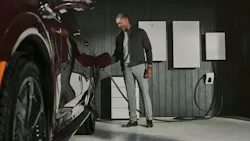
In April, GM Energy said that it was focused on selling its bidirectional electric vehicles (EV) in outage-prone communities-especially in Pacific Gas & Electric (PG&E) territory– where these mobile microgrids can help customers keep electricity flowing through blackouts and potentially provide grid services.
Now, GM is zeroing in on that goal, partnering with PG&E on a program that offers point-of-sale stacked EV incentives. This is the latest in a series of efforts designed to take advantage of all that bidirectional EVs can offer drivers and the grid.
For example, vehicle-to-grid programs are beginning to pay EV drivers through several new initiatives. In July, National Grid and Eversource launched a pilot that allows qualifying EV drivers to earn money by enrolling in the ConnectedSolutions incentive program. In addition, PG&E offers incentives for vehicle-to-everything–vehicle-to-home, business or grid–under a pilot program.
The new “Smart Charge Bundle,” launched Sept. 14, combines point-of-sale savings, monthly bill credits and bidirectional backup power.
Under the Smart Charge Bundle program, when PG&E customers buy or lease a GM Energy EV–Chevrolet, GMC or Cadillac EV– at participating dealerships in the utility’s service territory, they receive, at the point of sale, one of two free EV chargers valued at $1,999, said Joel Ulloa, manager of vehicle-to-grid integration at PG&E.
Automatic charge management for EV owners
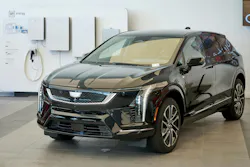
The Smart Charge Bundles enrolls the buyers in PG&E’s EV Charge Manager program, which provides a $15/month bill credit and the possibility of saving up to $50/month more. WeaveGrid, which offers grid orchestration software, automatically schedules the EV to charge when prices are lower, and customers can override that function if needed.
In July, WeaveGrid said it was collaborating with GM Energy to help its EV drivers participate in utility programs that help support the grid.
The WeaveGrid software helps PG&E avoid asset peaks, Ulloa said.
That includes secondary peaks that are caused by customers who charge at the beginning of off-peak time-of-use rates. Instead of having everyone charge at midnight, for example, it makes more sense to "soften" those peaks by moving charging sessions to other times. The software also helps reduce peaks on specific transformers.
“We see that most customers, primarily because they're enrolled in time-of-use rates, charge at the beginning of the off-peak period and we see a sharp spike at that time,” Ulloa said.
One option allows customers to back up their homes
A second option available under the Smart Charge Bundle program is the GM Energy PowerShift charger, which supports bidirectional charging so that customers can back up their homes. Customers choose one of the two chargers available.
Ulloa said customers are more likely to participate in these programs if the incentives are stacked at the point of sale.
“The idea is that they're more likely to use this rather than going back and having it installed later,” he said. “They are helping PG&E utilize the grid more efficiently, avoid grid constraints and help us drive affordability for all ratepayers, essentially, by doing this.”
The first phase of the EV Charge Manager pilot, which has been running since 2024, had 5,945 EVs enrolled tied to 5,481 customers, said Rachel Sarah, a clean energy and innovation spokesperson for PG&E.
Vehicle-to-home program attracts nearly 60 customers so far
As of Sept. 24, 58 customers were enrolled in the residential V2H program, which allows them to use their EVs to back up their homes during outages. Six customers were enrolled in the Smart Charge program, which is capped at 2,000 customers, she said.
With the vehicle-to-home charger, the size of the EV battery and the home’s power needs will determine how long the charger can back up the home.
“What you’re running in your household and the size of your battery are going to determine the amount of time that you can power your home,” Ulloa said.
Separately, under PG&E’s vehicle-to-everything (V2X) pilot, customers with non-GM EVs can participate. Tesla and Ford EVs qualify to participate in that program. Also qualifying under the pilot are non-GM chargers, including bidirectional charging systems from Ford, Tesla, Dcbel and Wallbox.
V2X customers must enroll in program to help support the grid
Under PG&E’s residential V2X pilot, customers must enroll in the Emergency Load Reduction Program, a California Public Utilities Commission effort designed to avoid rolling blackouts when the grid is stressed. This program offers incentives in addition to the ones offered under the Smart Charge Bundle program.
PG&E’s next step is to quantify the programs' impact in dollars or in grid terms, Ulloa said. The utility is also working to educate customers about the steps needed to participate in these programs.
“Our hypothesis is that these technologies and these efforts can help us improve the utilization of our grid, which thereby helps us drive affordability for all ratepayers,” Ulloa said.
About the Author
 Lisa Cohn
Contributing Editor
I focus on the West Coast and Midwest. Email me at [email protected]
I’ve been writing about energy for more than 20 years, and my stories have appeared in EnergyBiz, SNL Financial, Mother Earth News, Natural Home Magazine, Horizon Air Magazine, Oregon Business, Open Spaces, the Portland Tribune, The Oregonian, Renewable Energy World, Windpower Monthly and other publications. I’m also a former stringer for the Platts/McGraw-Hill energy publications. I began my career covering energy and environment for The Cape Cod Times, where Elisa Wood also was a reporter. I’ve received numerous writing awards from national, regional and local organizations, including Pacific Northwest Writers Association, Willamette Writers, Associated Oregon Industries, and the Voice of Youth Advocates. I first became interested in energy as a student at Wesleyan University, Middletown, Connecticut, where I helped design and build a solar house.
Twitter: @LisaECohn
Linkedin: LisaEllenCohn
Facebook: Energy Efficiency Markets